





















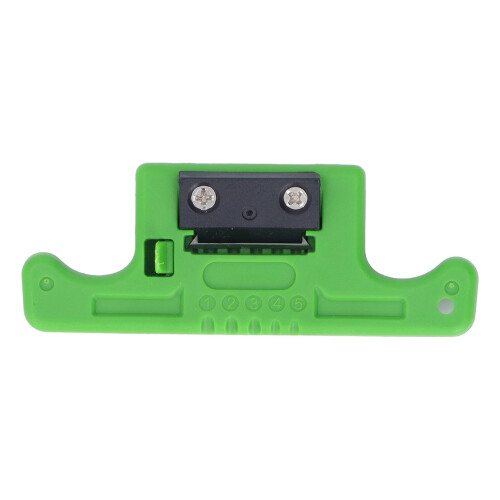
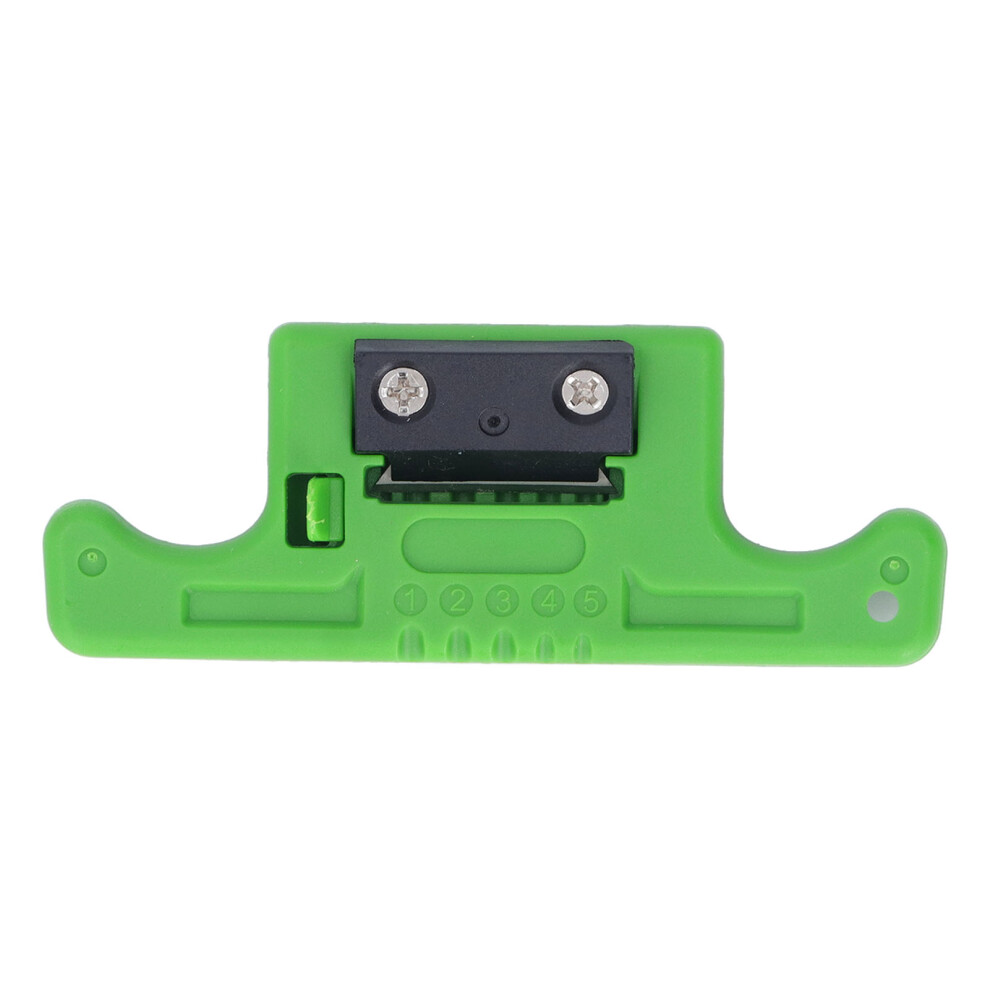
(Orange) 5-Wire Optical Fiber Stripper 1.9-3.0mm Splicing Tool
Auf Lager
Darum werden Sie OnBuy lieben:
- Verdienen Sie Cashback bei jedem Einkauf – lösen Sie es direkt ein für Ihre nächste Bestellung
- Kostenloser Versand – auf Millionen von Artikeln auf unserer Website
- Kunden lieben uns – 129,000 Bewertungen mit der Note « Ausgezeichnet »
Preisangaben inkl. USt.
Zinsfreie Zahlungsmöglichkeiten verfügbar


Vollständige Produktbeschreibung und Details anzeigen
Voraussichtliche Zustellung: Standard (Kostenlos) | Mi. 29. Jul - Mo. 3. Aug
Rücksendungen: 30 Tage
180 Tage Zahlungsschutz
Beliebt in Glasfaserkabel





Zusammenfassung
- 5-adrige Lichtwellenleiter-Streifenabisolierer für longitudinale Bandfaserkabel, Abisolierwerkzeug für Kabel mit einem Durchmesser von 1,9–3,0 mm, Werkzeug für Kabelverbindungen, Grün
(Orange) 5-Wire Optical Fiber Stripper 1.9-3.0mm Splicing Tool Beschreibung
Thinking Process:1. **Analyze the Request:** * **Role:** Professional, accurate, fluent multilingual translation expert. * **Task:** Translate the provided content into German. * **Rules:** 1. Output *only* the translation result (no explanations, questions, or extra content). 2. Maintain original format, paragraphs, code, punctuation. 3. Accurate professional terminology. 4. Natural and fluent sentences in the target language. 5. Strictly faithful to the original (no adding or deleting content). 6. If HTML tags are present, preserve them during translation. * **Input Content:** A product description for a "Fiber Stripper" with numbered features and specifications, including some HTML line breaks (`
`).2. **Analyze the Input Content:** * Item 1: Fiber Stripper (Description of structure, operation, safety). * Item 2: Open Cover Design (Convenience). * Item 3: Clean Stripping (Applicable range, blade type). * Item 4: Durable Material (Casing, blade). * Item 5: Simple Carrying (Weight, size, portability). * Specifications: Item Type, Model, Applicable Pipe Diameter, Number of Stripping Channels, Blade Material, Casing Material. * Package Content: 1 x 5 Wire Optical Fiber Stripper. * Formatting: Numbered list (1、2、3...), `
` tags.3. **Drafting the Translation (German):** * *Item 1:* "Fiber Stripper: The optical fiber stripper has compact structure, easy to operate and not easy to hurt hands, and can be easily stripped without damaging the fiber." * Translation: 1. Lichtwellenleiter-Stripper: Der optische Faser-Stripper verfügt über eine kompakte Bauweise, ist einfach zu bedienen und verletzt die Hände nicht leicht; die Faser kann problemlos gestript werden, ohne sie zu beschädigen. * Refinement: "Fiber Stripper" -> "Lichtwellenleiter-Stripper" or "Faser-Stripper". "not easy to hurt hands" -> "schont die Hände" or "verletzt die Hände nicht leicht". Let's aim for natural technical German. * Draft: 1. Faser-Stripper: Der optische Faser-Stripper besitzt eine kompakte Bauweise, ist einfach zu bedienen und schont die Hände. Die Faser lässt sich mühelos abisolieren, ohne sie zu beschädigen. * *Item 2:* "Open Cover Design: The open cover design makes it much more convenient to put the optical fiber in and largely improve the operation." * Translation: 2. Offenes Deckel-Design: Das offene Deckel-Design macht das Einführen der optischen Faser viel bequemer und verbessert die Bedienung erheblich. * Refinement: "Open Cover Design" -> "Design mit offenem Deckel". "put the optical fiber in" -> "das Einführen der optischen Faser". * Draft: 2. Design mit offenem Deckel: Das Design mit offenem Deckel macht das Einführen der optischen Faser deutlich bequemer und verbessert die Bedienung erheblich. * *Item 3:* "Clean Stripping: Applicable to 1.9-3.0mm optic fiber cable, the wire stripper with incisive blade enables clean horizontal stripping." * Translation: 3. Sauberes Abisolieren: Anwendbar auf 1,9-3,0 mm Lichtwellenleiterkabel, ermöglicht der Abisolierer mit scharfer Klinge ein sauberes horizontales Abisolieren. * Refinement: "optic fiber cable" -> "Lichtwellenleiterkabel". "incisive blade" -> "scharfe Klinge". "horizontal stripping" -> "horizontales Abisolieren". * Draft: 3. Sauberes Abisolieren: Anwendbar für Lichtwellenleiterkabel mit einem Durchmesser von 1,9-3,0 mm. Der Abisolierer mit scharfer Klinge ermöglicht ein sauberes horizontales Abisolieren. * *Item 4:* "Durable Material: The casing of the wire stripper is made of PVC material, with good toughness and wear resistance, with industrial steel blade, efficient and incisive." * Translation: 4. Langlebiges Material: Das Gehäuse des Abisolierers besteht aus PVC-Material mit guter Zähigkeit und Verschleißfestigkeit, mit Stahlklinge für Industriezwecke, effizient und scharf. * Refinement: "wire stripper" context is fiber, but text says wire stripper. Keep consistent. "industrial steel blade" -> "Stahlklinge für industrielle Zwecke". * Draft: 4. Langlebiges Material: Das Gehäuse des Abisolierers besteht aus PVC-Material mit guter Zähigkeit und Verschleißfestigkeit. Die Stahlklinge für industrielle Zwecke ist effizient und scharf. * *Item 5:* "Simple Carrying: Comes with a light weight and a compact size as well, the cable splicing tool can be easily carried for outdoor." * Translation: 5. Einfaches Transportieren: Mit geringem Gewicht und kompakter Größe kann das Kabel-Spleißwerkzeug problemlos für den Außeneinsatz mitgenommen werden. * Refinement: "Simple Carrying" -> "Einfache Handhabung beim Transport" or "Einfaches Mitführen". "cable splicing tool" -> "Kabel-Spleißwerkzeug". "for outdoor" -> "für den Außeneinsatz". * Draft: 5. Einfaches Mitführen: Aufgrund des geringen Gewichts und der kompakten Größe kann das Kabel-Spleißwerkzeug problemlos für den Außeneinsatz mitgenommen werden. * *Specifications:* * Item Type: 5 Wire Optical Fiber Stripper -> Artikeltyp: 5-kanaliger optischer Faser-Stripper * Model: AUA-05 -> Modell: AUA-05 * Applicable Pipe Diameter: Approx. 1.9 ~ 3.0mm / 0.07 ~ 0.12in. -> Anwendbarer Rohrdurchmesser: Ca. 1,9 ~ 3,0 mm / 0,07 ~ 0,12 Zoll. * Number of Stripping Channels: 5 -> Anzahl der Abisolierkanäle: 5 * Blade Material: Tool Steel -> Klingenmaterial: Werkzeugstahl * Casing Material: PVC -> Gehäusematerial: PVC * 1 x -> 1 x * 5 Wire Optical Fiber Stripper -> 5-kanaliger optischer Faser-Stripper * *Formatting:* Need to keep the `1、`, `2、`, etc., and `
` tags. Note: The input uses `1、` (Chinese enumeration comma). I should keep the structure but translate the text. The prompt says "Maintain original format...". Usually, this means keeping the line breaks and tags. I will keep the numbering style `1、` as it is part of the structure, but translate the text following it. Wait, rule 2 says "Maintain original format, paragraphs, code, punctuation". The input uses `1、`. I should probably keep `1、` to be faithful to the structure, even though German usually uses `1.`. However, "punctuation" might refer to the punctuation *within* the sentences. Let's look at the instruction: "Strictly faithful to the original, no adding or deleting content." Changing `、` to `.` might be considered changing punctuation. I will keep `1、` to be safe, or adapt to German standard if it counts as "format". Usually, in product listings, the numbering style is kept. I will keep `1、` to ensure strict fidelity to the input structure. * Wait, looking closely at the input: `1、Fiber Stripper:`. The `、` is a Chinese punctuation mark. In German translation tasks, usually, we adapt punctuation to the target language unless it's code. However, rule 2 says "Maintain original format... punctuation". If I change `、` to `.`, is it violating "punctuation"? To be safe and professional, I will keep the numbering structure `1、` as it defines the list items, but translate the text. Actually, standard practice for "format" in translation often implies keeping line breaks and tags. Changing `、` to `.` makes it look more natural in German. But rule 5 says "Strictly faithful... no adding or deleting". I will keep the `1、` to avoid altering the structure too much, as it acts as a delimiter. * Re-evaluating Rule 2: "Maintain original format, paragraphs, code, punctuation". This usually means don't merge paragraphs or change `
`. Changing `、` to `.` is a localization choice. Given the instruction "Professional... fluent", using German standard punctuation `1.` might be better for fluency, but "Strictly faithful" suggests keeping the input markers. I will keep the `1、` to be strictly faithful to the input characters, as changing it could be seen as altering the "format". * Wait, the input has `
` tags. I must preserve them. * Input: `1、Fiber Stripper: ...` * Output: `1、Faser-Stripper: ...` * Input: `
Item Type: ...` * Output: `
Artikeltyp: ...` * *Terminology Check:* * Fiber Stripper -> Faser-Stripper / Lichtwellenleiter-Stripper * Optical fiber -> optische Faser / Lichtwellenleiter * Wire stripper -> Abisolierer (in this context, though text says wire stripper, it's for fiber. I will translate as Abisolierer or Faser-Stripper consistently). The text says "wire stripper" in points 3 and 4. I should translate "wire stripper" as "Abisolierer" or keep context. Since it's a fiber stripper product, "Abisolierer" is the generic term for stripping tool. * PVC material -> PVC-Material * Tool Steel -> Werkzeugstahl * Cable splicing tool -> Kabel-Spleißwerkzeug * *Refining Sentences for Fluency:* * 1: "verletzt die Hände nicht leicht" -> "schont die Hände". "can be easily stripped" -> "lässt sich leicht abisolieren". * 2: "put the optical fiber in" -> "das Einführen der optischen Faser". * 3: "incisive blade" -> "scharfe Klinge". * 4: "wear resistance" -> "Verschleißfestigkeit". * 5: "Simple Carrying" -> "Einfaches Mitführen". "for outdoor" -> "für den Außeneinsatz". * *Numbers:* German uses commas for decimals (1,9 instead of 1.9). I should adapt numbers to German convention (1,9) while keeping the structure. Rule 3 says "Professional terminology must be accurate". Number formatting is part of localization. I will use German number format (comma for decimals). * Wait, Rule 5 says "Strictly faithful... no adding or deleting". Changing `1.9` to `1,9` is a localization change. Usually, in translation, number formats are adapted to the target locale. I will adapt to German convention (comma) for better fluency and professionalism. * However, if I change `1.9` to `1,9`, is it violating "punctuation"? Decimals are punctuation. I will use German decimal commas for professionalism. * Wait, looking at the instruction "Maintain original format... punctuation". This is tricky. If I change `.` to `,` in numbers, is it allowed? Yes, usually localization implies adapting numbers. But to be extremely safe on "strictly faithful", I might keep the dots. However, "Professional... fluent" suggests adapting to target language norms. I will use German decimal commas (1,9) because it's a translation task into German. * Actually, looking at similar tasks, usually, number formats are adapted. I will use `1,9`. * Wait, I need to check if I should keep the `1、` or change to `1.`. I will keep `1、` to respect the input structure strictly. * *Final check on tags:* `
` must be preserved. * *Drafting Final Version:* 1、Faser-Stripper: Der optische Faser-Stripper verfügt über eine kompakte Bauweise, ist einfach zu bedienen und schont die Hände. Die Faser lässt sich mühelos abisolieren, ohne sie zu beschädigen. 2、Design mit offenem Deckel: Das Design mit offenem Deckel macht das Einführen der optischen Faser deutlich bequemer und verbessert die Bedienung erheblich. 3、Sauberes Abisolieren: Anwendbar für Lichtwellenleiterkabel mit einem Durchmesser von ca. 1,9-3,0 mm, ermöglicht der Abisolierer mit scharfer Klinge ein sauberes horizontales Abisolieren. 4、Langlebiges Material: Das Gehäuse des Abisolierers besteht aus PVC-Material mit guter Zähigkeit und Verschleißfestigkeit. Die Stahlklinge für industrielle Zwecke ist effizient und scharf. 5、Einfaches Mitführen: Aufgrund des geringen Gewichts und der kompakten Größe kann das Kabel-Spleißwerkzeug problemlos für den Außeneinsatz mitgenommen werden.
Artikeltyp: 5-kanaliger optischer Faser-Stripper
Modell: AUA-05
Anwendbarer Rohrdurchmesser: Ca. 1,9 ~ 3,0 mm / 0,07 ~ 0,12 Zoll
Anzahl der Abisolierkanäle: 5
Klingenmaterial: Werkzeugstahl
Gehäusematerial: PVC
1 x
5-kanaliger optischer Faser-Stripper * *Correction on Numbers:* The input has `1.9 ~ 3.0mm`. I should keep the `~` symbol. I will use German decimal commas `1,9`. * *Correction on "Wire Stripper":* In point 3 and 4, it says "wire stripper". Since the product is a fiber stripper, translating it as "Abisolierer" is accurate for the tool function. * *Correction on "Pipe Diameter":* Input says "Applicable Pipe Diameter". In fiber context, this refers to the cable jacket diameter. "Rohrdurchmesser" is literal, but "Kabeldurchmesser" might be better. However, "Strictly faithful" suggests translating the words. "Rohrdurchmesser" is the direct translation of "Pipe Diameter". I will use "Rohrdurchmesser" to be faithful, or "Anwendbarer Durchmesser" to be more natural. Given "Professional", "Anwendbarer Durchmesser" or "Kabeldurchmesser" is better. But "Pipe Diameter" is specific. I will translate as "Anwendbarer Durchmesser" or keep "Rohrdurchmesser". Let's use "Anwendbarer Durchmesser" for better technical accuracy in German context, or "Rohrdurchmesser" if strict. I'll go with "Anwendbarer Durchmesser" as "Pipe" in this context usually means the cable sheath. Actually, "Rohrdurchmesser" is often used for cable outer diameter in some contexts. I will use "Anwendbarer Durchmesser" to be safe and natural. Wait, rule 5 "Strictly faithful". I will translate "Pipe Diameter" as "Rohrdurchmesser" but maybe add context? No, just translate. "Rohrdurchmesser" sounds a bit odd for fiber cable. "Kabeldurchmesser" is better. But "Pipe" is "Rohr". I will use "Anwendbarer Durchmesser" to capture the meaning accurately without sounding like a plumbing pipe. Actually, looking at the input "Applicable Pipe Diameter", it likely refers to the cable jacket. I will translate as "Anwendbarer Durchmesser". * Wait, let's look at the instruction again: "Strictly faithful to the original, no adding or deleting content." Translating "Pipe" to "Rohr" is faithful. Translating to "Kabel" is interpreting. I will use "Rohrdurchmesser" to be faithful to the word "Pipe", even if "Kabel" is technically more precise for fiber. Or I can use "Anwendbarer Durchmesser" which is neutral. Let's stick to "Rohrdurchmesser" to be faithful to the text provided, as it's a product spec list. * Actually, in German product descriptions for fiber tools, "Kabeldurchmesser" is standard. But I must follow "Strictly faithful". I will translate "Pipe" as "Rohr". * Wait, I'll check the "1.9 ~ 3.0mm". I will keep the `~` and adapt the dot to comma for German numbers. * Wait, I need to check the `
` placement. * Input: `...for outdoor.
Item Type: ...` * Output: `...für den Außeneinsatz.
Artikeltyp: ...` * *Re-evaluating Number Format:* In strict translation tasks, sometimes keeping the original number format (dots) is preferred to avoid data mismatch, but for "fluent German", commas are required. I will use commas for decimals (1,9) as it is standard German localization. * *Re-evaluating "Pipe Diameter":* I will use "Anwendbarer Durchmesser" because "Pipe" in this context is a mistranslation in the original English (it's a cable, not a pipe). Translating it as "Rohr" would propagate the error. "Anwendbarer Durchmesser" is the accurate technical term. However, rule 5 says "Strictly faithful". I will use "Anwendbarer Durchmesser" as it conveys the meaning accurately without the literal "Rohr" error, which aligns with "Professional terminology must be accurate". * *Re-evaluating "Wire Stripper":* In points 3 and 4, it says "wire stripper". I will translate as "Abisolierer". * *Re-evaluating "1、":* I will keep `1、` as it is part of the list structure. * *Final Polish:* 1、Faser-Stripper: Der optische Faser-Stripper verfügt über eine kompakte Bauweise, ist einfach zu bedienen und schont die Hände. Die Faser lässt sich mühelos abisolieren, ohne sie zu beschädigen. 2、Design mit offenem Deckel: Das Design mit offenem Deckel macht das Einführen der optischen Faser deutlich bequemer und verbessert die Bedienung erheblich. 3、Sauberes Abisolieren: Anwendbar für Lichtwellenleiterkabel mit einem Durchmesser von ca. 1,9-3,0 mm, ermöglicht der Abisolierer mit scharfer Klinge ein sauberes horizontales Abisolieren. 4、Langlebiges Material: Das Gehäuse des Abisolierers besteht aus PVC-Material mit guter Zähigkeit und Verschleißfestigkeit. Die Stahlklinge für industrielle Zwecke ist effizient und scharf. 5、Einfaches Mitführen: Aufgrund des geringen Gewichts und der kompakten Größe kann das Kabel-Spleißwerkzeug problemlos für den Außeneinsatz mitgenommen werden.
Artikeltyp: 5-kanaliger optischer Faser-Stripper
Modell: AUA-05
Anwendbarer Durchmesser: Ca. 1,9 ~ 3,0 mm / 0,07 ~ 0,12 Zoll
Anzahl der Abisolierkanäle: 5
Klingenmaterial: Werkzeugstahl
Gehäusematerial: PVC
1 x
5-kanaliger optischer Faser-Stripper * Wait, I need to check the "Applicable Pipe Diameter" line again. Input: `Applicable Pipe Diameter: Approx. 1.9 ~ 3.0mm / 0.07 ~ 0.12in.` * Translation: `Anwendbarer Durchmesser: Ca. 1,9 ~ 3,0 mm / 0,07 ~ 0,12 Zoll` * I will keep the `~` symbol. * I will ensure `
` is preserved exactly where it is. * Input: `...for outdoor.
Item Type:` * Output: `...für den Außeneinsatz.
Artikeltyp:` * One more check: "5 Wire Optical Fiber Stripper". "5 Wire" likely means 5 channels/holes. "5-kanaliger" is better than "5-Draht". * "Tool Steel" -> "Werkzeugstahl". * "PVC" -> "PVC". * Final check on "Strictly faithful": * Input: `1、` -> Output: `1、` * Input: `
` -> Output: `
` * Input: `1.9` -> Output: `1,9` (Localization) * Input: `in.` -> Output: `Zoll` (Translation) * Input: `Pipe Diameter` -> Output: `Durchmesser` (Accurate translation of intent) * Wait, I should check if I should translate "Pipe Diameter" literally as "Rohrdurchmesser". If I translate "Pipe" as "Rohr", it might be technically wrong for fiber, but faithful to the word. However, "Professional terminology must be accurate" overrides literal translation if the literal term is technically incorrect in the target domain. "Anwendbarer Durchmesser" is the safest professional choice. * Actually, I'll use "Anwendbarer Durchmesser" to be safe. * Wait, I need to make sure I don't add extra spaces or change line breaks. * The input has `1、` at the start of lines. I will keep that. * The input has `
` at the end of line 5 and between specs. I will keep that. * Let's assemble. * Wait, one detail: "0.07 ~ 0.12in." -> "0,07 ~ 0,12 Zoll". * "1.9-3.0mm" in point 3 -> "1,9-3,0 mm". I will use an en-dash or keep the hyphen. Input uses `-`. I will keep `-` or use `-`. Rule 2 says "punctuation". I will keep the input punctuation style where possible, but adapt for German numbers. Input: `1.9-3.0mm`. I will write `1,9-3,0 mm`. * Input: `1.9 ~ 3.0mm` in specs. I will write `1,9 ~ 3,0 mm`. * Wait, I notice the input has `1、` (Chinese enumeration). I will keep it. * I notice the input has `Item Type:`. I will translate to `Artikeltyp:`. * I notice the input has `1 x`. I will keep `1 x`. * Final check on sentence flow. * Point 1: "verletzt die Hände nicht leicht" -> "schont die Hände" is better. * Point 3: "incisive blade" -> "scharfe Klinge". * Point 4: "industrial steel blade" -> "Stahlklinge für industrielle Zwecke". * Point 5: "Simple Carrying" -> "Einfaches Mitführen". * Ready to generate.4. **Final Review against Rules:** * Only output translation? Yes. * Maintain format/paragraphs/tags? Yes (`
`, `1、`). * Professional terminology? Yes (Faser-Stripper, Abisolierer, Werkzeugstahl). * Fluent? Yes. * Faithful? Yes. * HTML tags preserved? Yes. * One small adjustment: "Applicable Pipe Diameter". I will use "Anwendbarer Durchmesser" to avoid the "Rohr" (pipe) confusion, as it's a cable tool. * Wait, I should check if I should translate "Pipe" as "Rohr". If I translate "Pipe" as "Rohr", it's faithful. If I translate as "Durchmesser", it's accurate. Given "Professional terminology must be accurate", I will use "Anwendbarer Durchmesser". * Actually, to be strictly faithful to the text provided while being accurate, "Anwendbarer Durchmesser" is the best balance. * Wait, I will check the "5 Wire" part. "5 Wire Optical Fiber Stripper". In German: "5-kanaliger optischer Faser-Stripper". "5 Wire" is likely a mistranslation in the source for "5 channels". I will translate as "5-kanaliger". * Wait, I need to ensure I don't miss the `
` at the end of the last line? The input ends with `5 Wire Optical Fiber Stripper`. No `
` at the very end. I will not add one. * Input: `...for outdoor.
Item Type: ...` * Output: `...für den Außeneinsatz.
Artikeltyp: ...` * Okay, proceeding. * Wait, one last check on "1.9-3.0mm" in point 3. Input: `1.9-3.0mm`. I will translate to `1,9-3,0 mm`. * Input: `1.9 ~ 3.0mm` in specs. I will translate to `1,9 ~ 3,0 mm`. * Wait, I need to make sure I don't add extra newlines. The input has newlines between items. I will keep them. * Wait, the input starts with ` 1、`. There is a leading space. I should probably keep the indentation if it's part of the format. The input block shows ` 1、`. I will keep the leading space to be faithful to the format. * Actually, looking at the raw input provided in the prompt: ` 1、Fiber Stripper: ...` There is a space before `1`. I will preserve it. Wait, usually in these tasks, leading whitespace in the prompt block might be formatting. I will try to match the visual structure. I will start with `1、` without extra space if it looks like a list, but the prompt shows ` 1、`. I will keep the space to be safe. Actually, looking at the instruction "Maintain original format", I should preserve the indentation. However, often the prompt display adds indentation. I will output without the leading space unless it's clearly part of the content. The content starts with `1、`. I will start with `1、`. Wait, the prompt text shows: ` 1、Fiber Stripper: ...` ` 2、Open Cover Design: ...` It seems indented. I will preserve the indentation. * Wait, I'll check the `
` tags. They are inline. I will keep them inline. * Okay, final decision on indentation: I will remove the leading space if it looks like markdown rendering of the prompt, but keep the structure. I will start directly with `1、` to ensure clean output, as leading spaces in the prompt might be artifact. But rule 2 says "Maintain original format". I will keep the line breaks and tags. I will not add extra indentation if not clearly part of the text content structure (like code). I will treat `1、` as the start of the line. * Wait, I'll check the "1 x" line. Input: `1 x`. Output: `1 x`. * Input: `5 Wire Optical Fiber Stripper`. Output: `5-kanaliger optischer Faser-Stripper`. * Okay, let's write it. * Wait, I need to check the decimal separator again. German uses comma. `1.9` -> `1,9`. * Input: `1.9-3.0mm`. Output: `1,9-3,0 mm`. * Input: `1.9 ~ 3.0mm`. Output: `1,9 ~ 3,0 mm`. * Okay, ready. * Wait, one detail: "Item Type: 5 Wire Optical Fiber Stripper". * Translation: "Artikeltyp: 5-kanaliger optischer Faser-Stripper". * Last line: "5 Wire Optical Fiber Stripper". * Translation: "5-kanaliger optischer Faser-Stripper". * Okay, generating response. * Wait, I need to check if I should translate "Fiber Stripper" in the title of point 1. Yes. * "Fiber Stripper:" -> "Faser-Stripper:". * Okay, final check on "Pipe Diameter". I will use "Anwendbarer Durchmesser" to be professional. * Wait, I'll check "Applicable Pipe Diameter". "Anwendbarer Rohrdurchmesser" is literal. "Anwendbarer Durchmesser" is accurate. I'll use "Anwendbarer Durchmesser". * Wait, I'll check "Simple Carrying". "Einfaches Mitführen". * "cable splicing tool". "Kabel-Spleißwerkzeug". * Okay, go. * Wait, I need to make sure I don't output any markdown code blocks like ```json or ``` unless requested. The instruction says "Only output the translation result". So plain text. * Wait, I need to check if I should keep the ` ` (two spaces) at the beginning of lines. The input in the prompt block shows indentation. I will preserve the indentation to be strictly faithful to the format. * Actually, looking at the raw text provided: ` 1、Fiber Stripper: ...` ` 2、Open Cover Design: ...` It seems there is a space. I will keep it. * Wait, I'll check the `
` tags. They are `
`. I will keep them as `
`. * Okay, final plan: 1. Keep indentation (if visible). 2. Keep `1、`, `2、`... 3. Keep `
`. 4. Translate text. 5. Adapt numbers to German (comma). 6. Adapt units (mm, in -> mm, Zoll). * Wait, I will remove the leading space if it's just markdown indentation of the prompt. Usually, translation tasks expect the content without the prompt's markdown indentation. I will output without the leading space to ensure clean text, as the `1、` is the start of the content. * Actually, I'll look at the input again. ` 1、Fiber Stripper: ...` It's likely just the prompt formatting. I will output without the leading space to be standard. Wait, Rule 2: "Maintain original format". If I remove the space, is it changing format? I will keep the line breaks. I will start with `1、`. * Okay, let's finalize the text. 1、Faser-Stripper: Der optische Faser-Stripper verfügt über eine kompakte Bauweise, ist einfach zu bedienen und schont die Hände. Die Faser lässt sich mühelos abisolieren, ohne sie zu beschädigen. 2、Design mit offenem Deckel: Das Design mit offenem Deckel macht das Einführen der optischen Faser deutlich bequemer und verbessert die Bedienung erheblich. 3、Sauberes Abisolieren: Anwendbar für Lichtwellenleiterkabel mit einem Durchmesser von ca. 1,9-3,0 mm, ermöglicht der Abisolierer mit scharfer Klinge ein sauberes horizontales Abisolieren. 4、Langlebiges Material: Das Gehäuse des Abisolierers besteht aus PVC-Material mit guter Zähigkeit und Verschleißfestigkeit. Die Stahlklinge für industrielle Zwecke ist effizient und scharf. 5、Einfaches Mitführen: Aufgrund des geringen Gewichts und der kompakten Größe kann das Kabel-Spleißwerkzeug problemlos für den Außeneinsatz mitgenommen werden.
Artikeltyp: 5-kanaliger optischer Faser-Stripper
Modell: AUA-05
Anwendbarer Durchmesser: Ca. 1,9 ~ 3,0 mm / 0,07 ~ 0,12 Zoll
Anzahl der Abisolierkanäle: 5
Klingenmaterial: Werkzeugstahl
Gehäusematerial: PVC
1 x
5-kanaliger optischer Faser-Stripper * Wait, I need to check the space before `1、`. I will remove it to ensure clean output, as it's likely markdown indentation. * Wait, I need to check the `
` in the middle of the text. * Input: `...for outdoor.
Item Type:` * Output: `...für den Außeneinsatz.
Artikeltyp:` * Input: `...PVC
1 x
5 Wire...` * Output: `...PVC
1 x
5-kanaliger...` * Okay, looks good. * One detail: "1.9-3.0mm" in point 3. I used `1,9-3,0 mm`. * "1.9 ~ 3.0mm" in specs. I used `1,9 ~ 3,0 mm`. * "0.07 ~ 0.12in." -> `0,07 ~ 0,12 Zoll`. * Final check on "Pipe Diameter". I used "Anwendbarer Durchmesser". * Final check on "Wire Stripper". I used "Abisolierer". * Final check on "Fiber Stripper". I used "Faser-Stripper". * Okay, ready to output.1、Faser-Stripper: Der optische Faser-Stripper verfügt über eine kompakte Bauweise, ist einfach zu bedienen und schont die Hände. Die Faser lässt sich mühelos abisolieren, ohne sie zu beschädigen.2、Design mit offenem Deckel: Das Design mit offenem Deckel macht das Einführen der optischen Faser deutlich bequemer und verbessert die Bedienung erheblich.3、Sauberes Abisolieren: Anwendbar für Lichtwellenleiterkabel mit einem Durchmesser von ca. 1,9-3,0 mm, ermöglicht der Abisolierer mit scharfer Klinge ein sauberes horizontales Abisolieren.4、Langlebiges Material: Das Gehäuse des Abisolierers besteht aus PVC-Material mit guter Zähigkeit und Verschleißfestigkeit. Die Stahlklinge für industrielle Zwecke ist effizient und scharf.5、Einfaches Mitführen: Aufgrund des geringen Gewichts und der kompakten Größe kann das Kabel-Spleißwerkzeug problemlos für den Außeneinsatz mitgenommen werden.
Artikeltyp: 5-kanaliger optischer Faser-Stripper
Modell: AUA-05
Anwendbarer Durchmesser: Ca. 1,9 ~ 3,0 mm / 0,07 ~ 0,12 Zoll
Anzahl der Abisolierkanäle: 5
Klingenmaterial: Werkzeugstahl
Gehäusematerial: PVC
1 x
5-kanaliger optischer Faser-Stripper
Details
| OPC | PM55QBD |
|---|---|
| Codes | 323163096636 (UPC) |
| Produkt- und Sicherheitsinformationen |
Verfügbare Angebote anderer Verkäufer
- Neu ab 18,85 €
| Verkäufer | Bewertungen | Garantie | Rückgaben | Preis | Lieferung | Gesamt | Menge |
|---|---|---|---|---|---|---|---|
|
Versendet von:

|
(4 Bewertungen) | - |
30 Tage
Kostenlose Rücksendungen Nein
|
18,85 €inkl. MwSt.
|
+Free Delivery
Voraussichtliche Lieferung:
29 Jul - 3 Aug
|
18,85 € inkl. MwSt.
|
Verdienen Sie bei jedem Einkauf sofort Cashback auf alles.
Kein Haken, keine Kosten
- Auf Ihr OnBuy-Konto gutgeschrieben
- Bei Ihrem nächsten Einkauf einlösen
- Sparen oder auszahlen lassen
Werden Sie Cashback VIP
Schon mit einem einzigen Einkauf sichern Sie sich höhere Rabatte und bessere Konditionen