





















Product Images







Hurry only 1 left
Smart shoppers OnBuy it!
Interest-free payment options available


See full product description & details
Delivery: Standard (Free) | Mon 20th - Wed 22nd Jul
Returns: 30 days
180-day payment protection




Summary
1.2-12V 18650 Li ion Lead acid Battery Capacity Meter Discharge Tester Analyzer
Features:
.
This
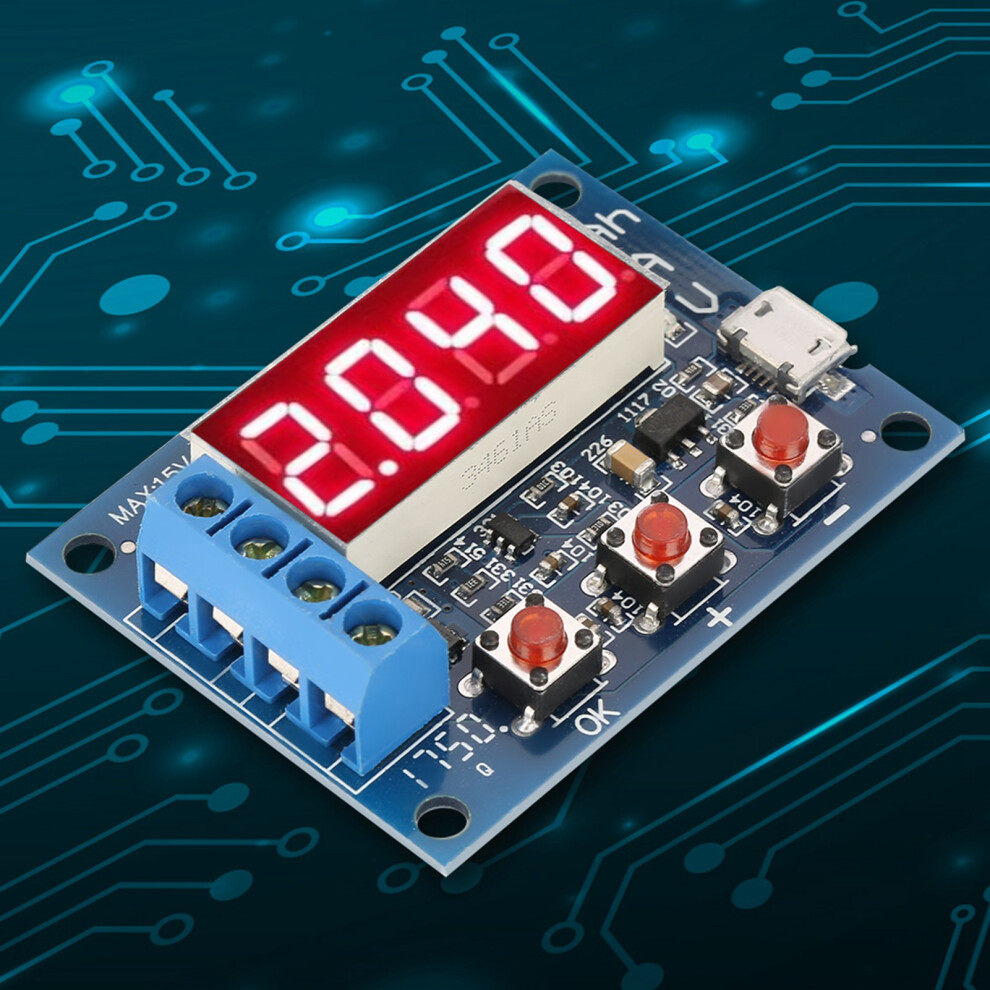
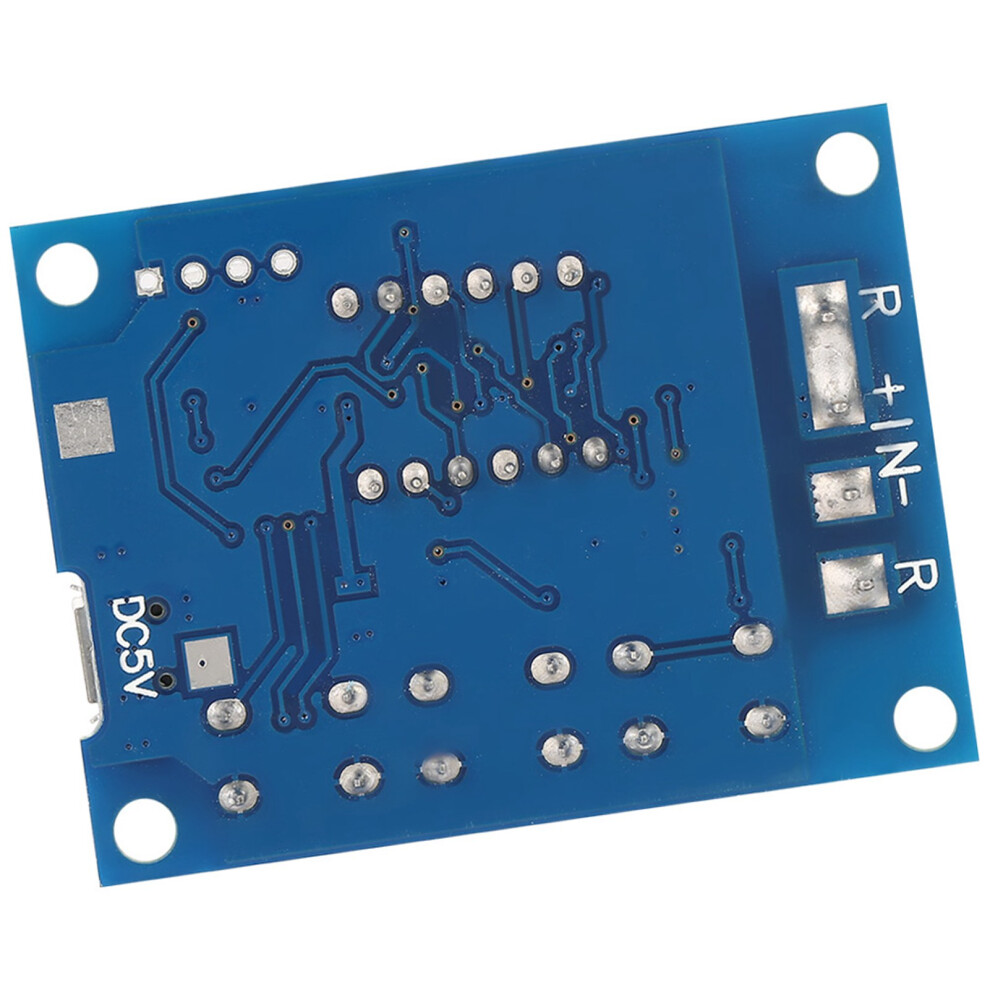
discharge tester is used for testing capacity of a 1.2-12V battery.
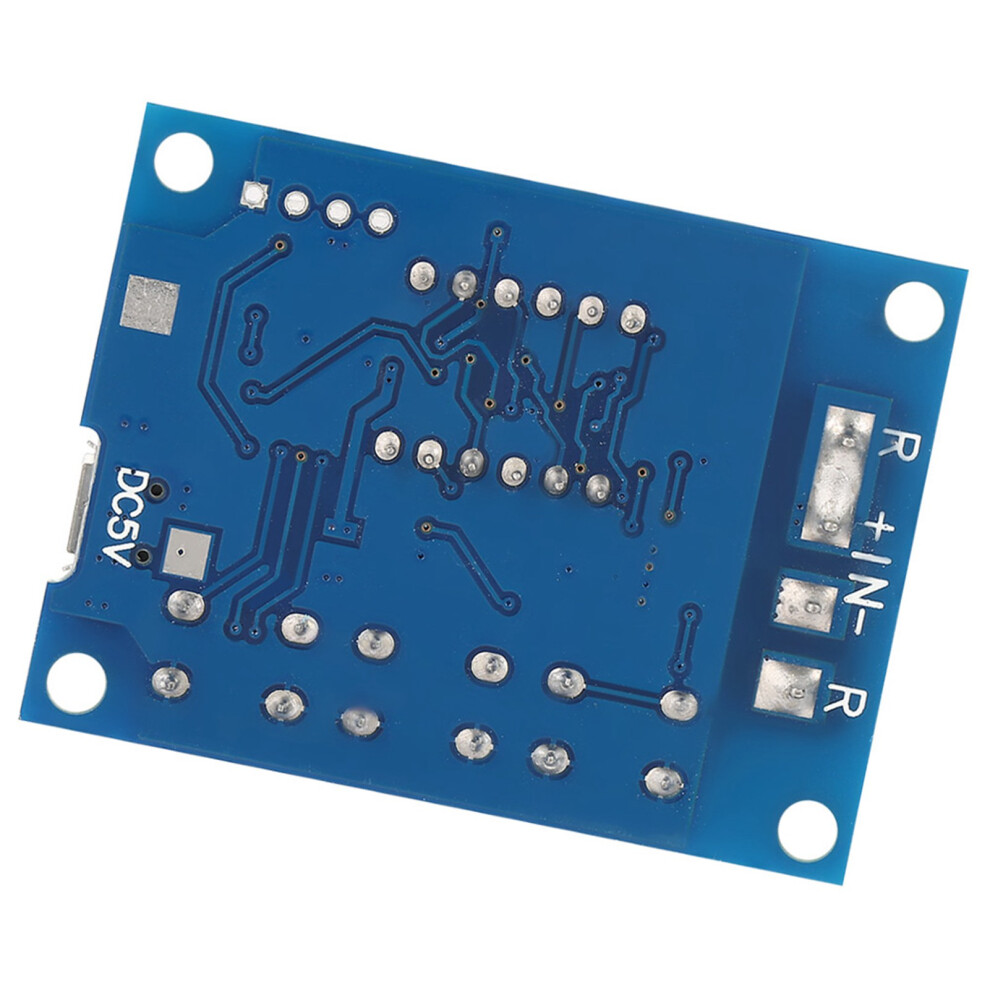
It is easy to operate and powered by micro
USB power source.
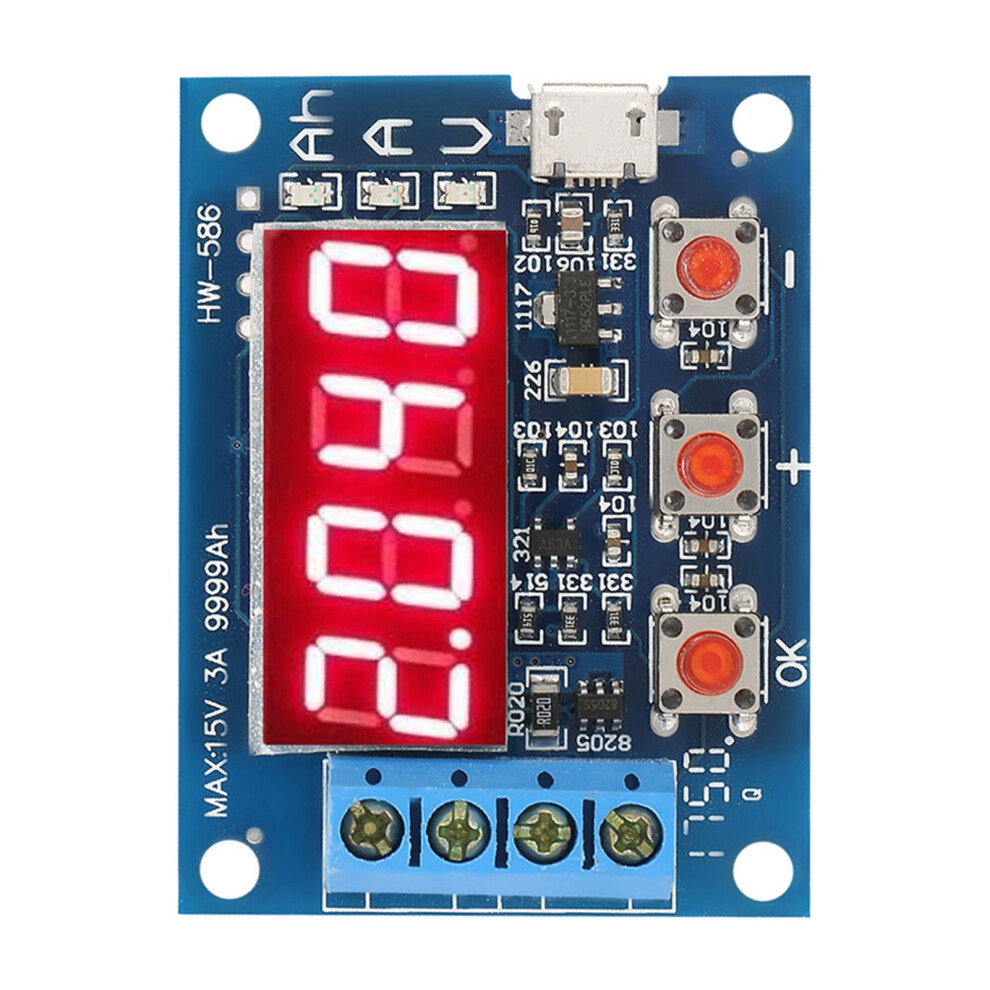
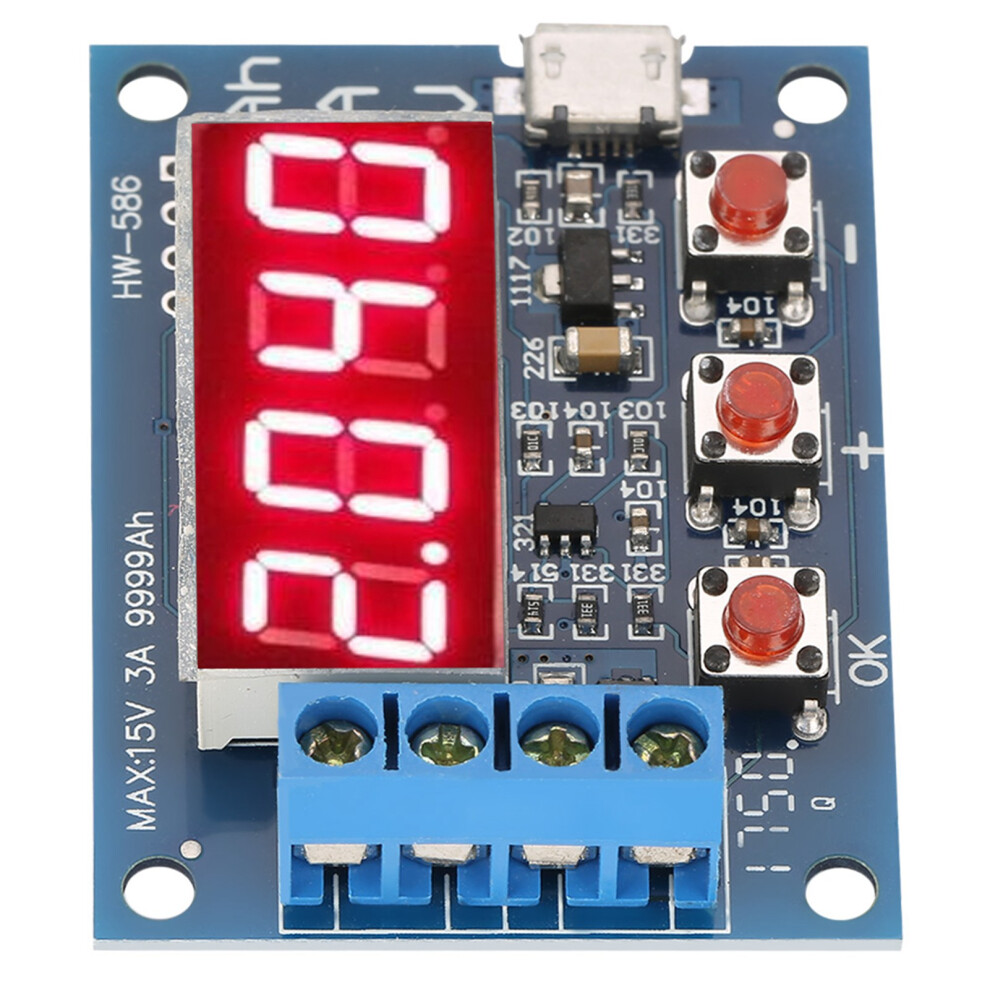
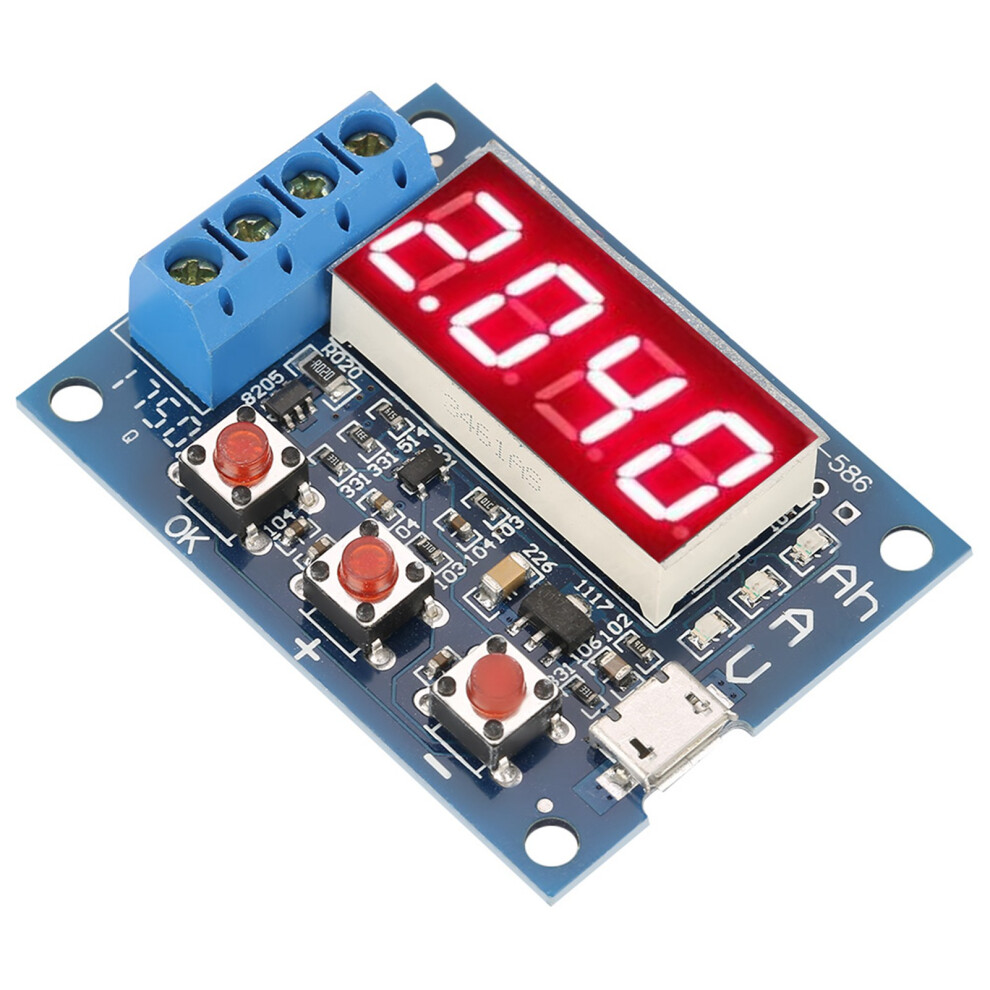
This discharge tester allows you to check the test capacity, voltage, and current of battery.
Designed with LEDs that indicate which parameter is showing on display.
Specification:
Power Source Voltage: DC4.5-6V (micro USB)
Working Current: 70mA
Discharge Voltage: 1.00V-15.00V, resolution 0.01V
Cutoff Voltage Range: 0.5-11.0V
Supported Current: 3.000A, resolution 0.001A
Voltage Test Error: <1%+0.02V
Current Test Error: <1.2%+-0.002A
Battery Capacity Range: 9999Ah (1Ah=1000mAh, the decimal point can move when the number is large, e.g. it displays X.XXX when lower than 10Ah, and displays XX.XX when higher than 10Ah... )
Weight: 27g / 1oz (approx.)
Package list:
1 * Battery Capacity Meter
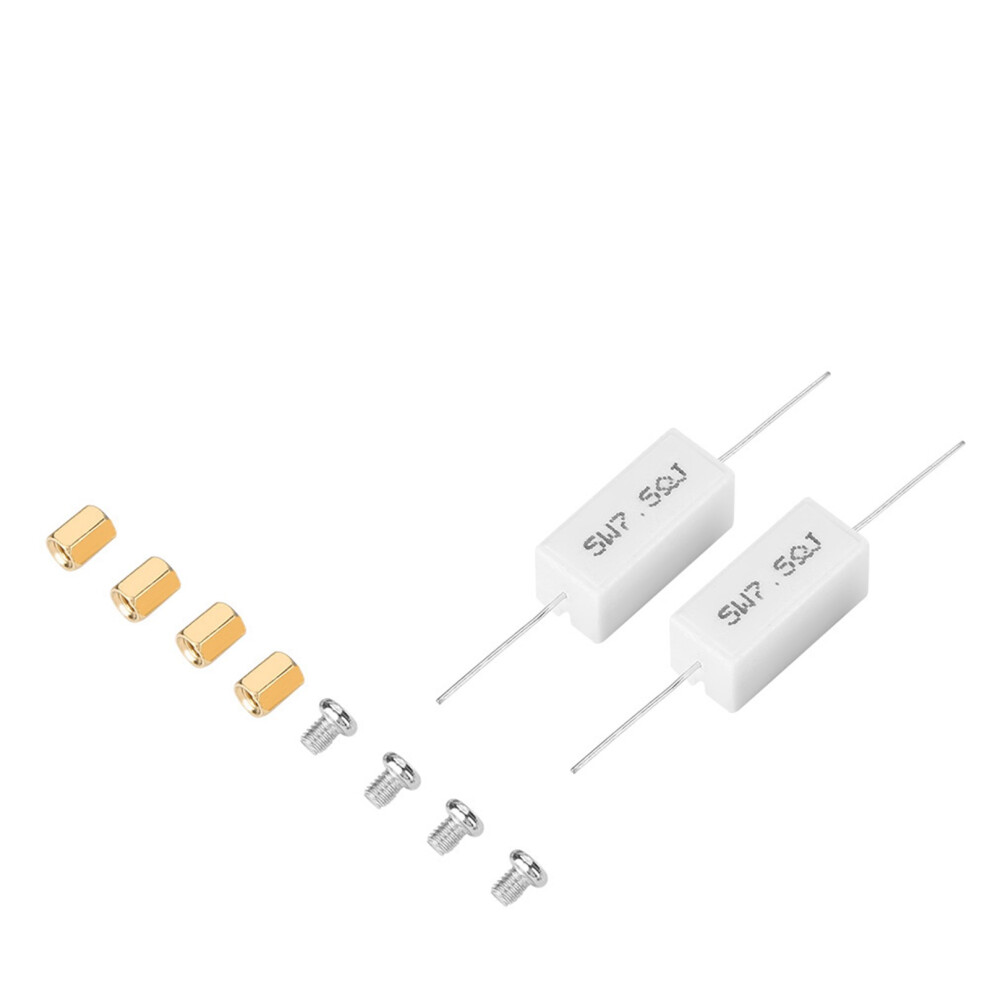
2 * Resistors (5W, 7.5R)
1 set * Fasteners
Note:
1, The resistor load will heat up severely during discharge process, please be careful.
2, In order to improve the voltage measurement accuracy, this circuit is specially designed with a DC bias, and will display a small voltage when not connecting terminal blocks to anything, which does not affect the actual measurement. If you connect input terminals together(0V), it will display 0.
Estimating method for collocation resistance:According to Ohm's law, to estimate the resistance value = divide battery voltage by expected discharge current; resistor power choice is more than two times of result that the battery voltage is multiplied by expected discharge current. It is important to note the voltage is higher when battery is fully charged, and to ensure that the current can not be more than 3.0A in the case of full charged battery voltage.For example, if need e 2A to test 12V battery, then the resistor should be 6Ω 50 W. New 12V battery fully charged voltage is about 13.5V, which is corresponding to the maximum current 13.5/6=2.25A (less than 3A), so it can be used.In addition if you use the lamp bulb to test, then the current can only be less than half (1.5 A) because the light bulb cold resistance is low, the impact current is very big, too big current may burn circuit directly.
Instruction:
1. The measured battery should be charged in the first place.
2. Connect the battery to the input terminals correctly(positive to positive, negative to negative), reverse input may damage the circuit.Connect load to the output positive and negative, then power the meter with micro USB work power (do not use a desktop computer or laptop USB as power supply), it displays the battery voltage at this time.
3. Direct start test just need to press the "OK" button, then meter will automatically develop an appropriate cutoff voltage according to the battery fully charged voltage, then begin testing after display flashing 3 times.If need manual setting up for cutoff voltage, you can press "+" or "-" button when ti shows battery voltage. The cutoff voltage is displayed with a initial "P", and the resolution is 0.1 V, press "OK" to start testing after setting.
4. The testing data will be displayed in turns among discharge capacity (Ah), real-time discharge current (A) and battery voltage (V). When the battery voltage reaches set cutoff voltage, tester cut off the load control switch, and displays capacity (Ah) and fast flashing indicator light. The capacity now displayed is the actual discharge capacity of the battery. Press the "OK" button to stop flashing, and press the "OK" button again to reset tester for next battery testing.
Error code and meaning:
Err1:battery voltage is higher than 15V
Err2:battery voltage is lower than set cutoff voltage
Err3:load discharge current is too big for battery or circuit inner resistance is too big
Err4:current is too big (current is more than 3.1A)
Err5:Improper use or burned tester because of incorrect connection (current sampling or control switch MOS is burned)
Secondary calibration operation:
Press and hold three buttons at the same time and power tester to enter calibration mode. First display calibration record times then enter formal calibration sampling program shows 0u0A; Connect input terminals positive and negative then press the "OK" button, display shows J10u; Connect standard 10.00V DC voltage to input positive and negative then press the "OK" button, display shows J2.0 A; Connect constant 2.0A DC current to output negative and input negative then press the "OK" button to complete the calibration.Tester will pre-check calibration data, if the calibration data is correct, it will show four calibration data in turns then exit; if pre-check of data is unreliable, it discards the data then exit.
Details
| OPC | PSWYDZW |
|---|---|
| Codes | 9351392630582 (EAN) |
| Seller | Ratings | Warranty | Returns | Price | Delivery | Total | Quantity |
|---|---|---|---|---|---|---|---|
| (5 reviews) | - |
30 Days
Free Returns No
|
£7.78
|
+Free Delivery
Est. Delivery:
20th-22nd Jul
|
£7.78
|
Earn as you shop with instant Cashback on everything.
No catch, no cost
Become a Cashback VIP
Just 1 purchase unlocks bigger deals & rates
Wait! You've left
something behind...
You'll only get instant Cashback at OnBuy! Enter your email below and we'll send you a copy of your basket to save you time later.
No thanks, I'm alright for now
By entering your email address, you'll automatically be added to our database, where you can enjoy personalised Cashback offers and early access to our best deals. You can opt out of our emails at any time and we'll never share your details with anyone. Check our Privacy Policy and T&Cs to find out more.
Before you go...
Remember, you'll only get instant Cashback on everything at OnBuy!
Want access to personalised offers and the highest Cashback rates? Sign up to our emails below.
No thanks, I'm alright for now
You can opt out of our emails at any time and we'll never share your details with anyone. Check our Privacy Policy and T&Cs to find out more.