



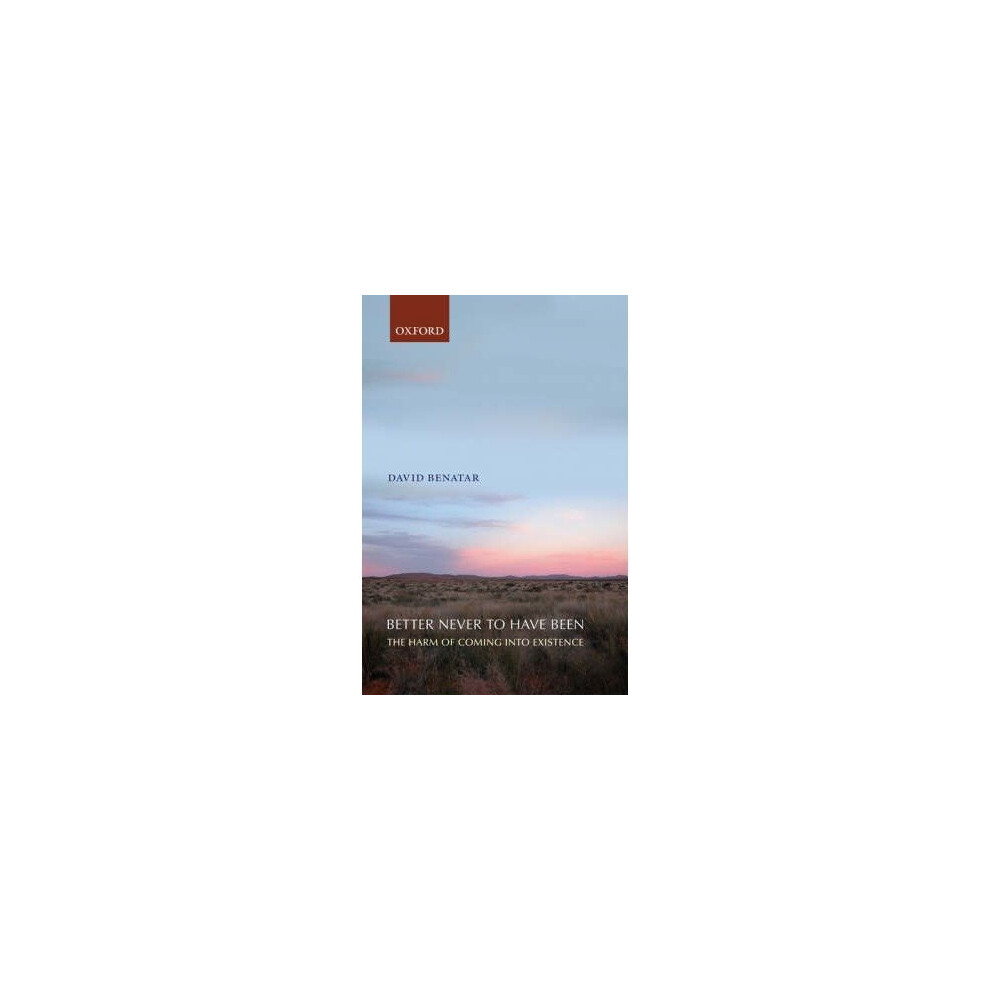
Better Never to Have Been
In stock
Smart shoppers OnBuy it!
- Earn Cashback on every purchase – spend it instantly on your next order
- Free delivery – on millions of items across the site
- Customers love us – 139,000 Trustpilot reviews and an 'Excellent' rating
Interest-free payment options available


See full product description & details
Delivery: Standard (Free) | Wed 2nd - Fri 4th Dec
Sold by: PBShop, there is 1 other seller
Returns: 30 days
180-day payment protection
You might also like




Better Never to Have Been Description
Most people believe that they were either benefited or at least not harmed by being brought into existence. Thus, if they ever do reflect on whether they should bring others into existence--rather than having children without even thinking about whether they should--they presume that they do them no harm. Better Never to Have Been challenges these assumptions. David Benatar argues that coming into existence is always a serious harm. Although the good things in one's life make one's life go better than it otherwise would have gone, one could not have been deprived by their absence if one had not existed. Those who never exist cannot be deprived. However, by coming into existence one does suffer quite serious harms that could not have befallen one had one not come into existence. Drawing on the relevant psychological literature, the author shows that there are a number of well-documented features of human psychology that explain why people systematically overestimate the quality of their lives and why they are thus resistant to the suggestion that they were seriously harmed by being brought into existence. The author then argues for the 'anti-natal' view--that it is always wrong to have children--and he shows that combining the anti-natal view with common pro-choice views about foetal moral status yield a 'pro-death' view about abortion (at the earlier stages of gestation). Anti-natalism also implies that it would be better if humanity became extinct. Although counter-intuitive for many, that implication is defended, not least by showing that it solves many conundrums of moral theory about population.Details
| OPC | P6F7JF |
|---|---|
| Codes | 0199549265 (ISBN-10) |
| 9780199549269 (ISBN) |
Detailed Product Information
| Author | David Benatar |
|---|---|
| Publisher | Oxford University Press |
| Book Type | Paperback |
| Release Date | 10/07/2008 |
| Author | David Benatar |
| Publisher | Oxford University Press |
| Book Type | Paperback |
| Release Date | 10/07/2008 |
Disclaimer: The information below is provided by various external sources and should be used as a guide only.
Most people believe that they were either benefited or at least not harmed by being brought into existence. Thus if they ever do reflect on whether they should bring others into existence—-rather than having children without even thinking about whether they should—-they presume that they do them no harm. Better Never to Have Been challenges these assumptions. David Benatar argues that coming into existence is always a serious harm. Although the good things in one's life make one's life go better than it otherwise would have gone one could not have been deprived by their absence if one had not existed. Those who never exist cannot be deprived. However by coming into existence one does suffer quite serious harms that could not have befallen one had one not come into existence. Drawing on the relevant psychological literature the author shows that there are a number of well-documented features of human psychology that explain why people systematically overestimate the quality of their lives and why they are thus resistant to the suggestion that they were seriously harmed by being brought into existence. The author then argues for the 'anti-natal' view—-that it is always wrong to have children—-and he shows that combining the anti-natal view with common pro-choice views about foetal moral status yield a 'pro-death' view about abortion (at the earlier stages of gestation). Anti-natalism also implies that it would be better if humanity became extinct. Although counter-intuitive for many that implication is defended not least by showing that it solves many conundrums of moral theory about population.
Alternative names:
- ISBN Better Never to Have Been ( The Harm of Coming into Existence ) 256 pages English
Detailed Product Information
Features
| Language version | English |
|---|---|
| Release date (DD/MM/YYYY) | 10/07/2008 |
| Number of pages | 256 pages |
| Written by | David Benatar |
| Publisher | Oxford University Press |
| Suggested gender | Any gender |
| International Standard Book Number (ISBN) | 9780199549269 |
Customers also buy
Compare Sellers for Better Never to Have Been
- New from £34.11
| Seller | Ratings | Warranty | Returns | Price | Delivery | Total | Quantity |
|---|---|---|---|---|---|---|---|
| (2.7k reviews) | - |
30 Days
Free Returns No
|
£34.11
|
+Free Delivery
Est. Delivery:
2nd-4th Dec
|
£34.11
Recommended
We recommend listings based on a combination of price, delivery time, quality of seller reviews and other factors
|
||
| (211 reviews) | - |
30 Days
Free Returns No
|
£46.27
|
+Free Delivery
Est. Delivery:
15th-17th Dec
|
£46.27
|
Earn as you shop with instant Cashback on everything.
No catch, no cost
- Paid into your OnBuy account
- Spend it on your next purchase
- Save it or withdraw it
Become a Cashback VIP
Just 1 purchase unlocks bigger deals & rates