





















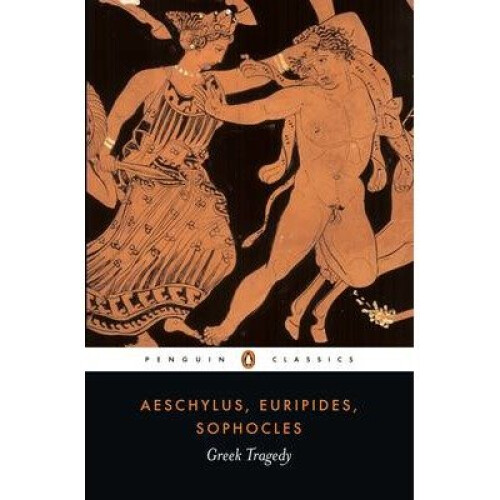

Greek Tragedy
In stock
Smart shoppers OnBuy it!
- Earn Cashback on every purchase – spend it instantly on your next order
- Free delivery – on millions of items across the site
- Customers love us – 136,000 Trustpilot reviews and an 'Excellent' rating
Interest-free payment options available



See full product description & details
Delivery: Standard (Free) | Mon 19th - Tue 20th Oct
There are 2 other sellers
Returns: 30 days
180-day payment protection
Greek Tragedy Description
Agememnon is the first part of the Aeschylus's Orestian trilogy in which the leader of the Greek army returns from the Trojan war to be murdered by his treacherous wife Clytemnestra. In Sophocles' Oedipus Rex the king sets out to uncover the cause of the plague that has struck his city, only to disover the devastating truth about his relationship with his mother and his father. Medea is the terrible story of a woman's bloody revenge on her adulterous husband through the murder of her own children.Details
| OPC | P6DJRH |
|---|---|
| Codes | 014143936X (ISBN-10) |
| 9780141439365 (ISBN) |
Detailed Product Information
| Release Date | 26/08/2004 |
|---|---|
| Book Type | Paperback |
| Publisher | Penguin Books Ltd |
| Author | Aeschylus |
| Release Date | 26/08/2004 |
| Book Type | Paperback |
| Publisher | Penguin Books Ltd |
| Author | Aeschylus |
| Release Date | 26/08/2004 |
| Book Type | Paperback |
| Publisher | Penguin Books Ltd |
| Author | Aeschylus |
Disclaimer: The information below is provided by various external sources and should be used as a guide only.
Greek Tragedy
Three masterpieces of classical tragedy
Containing Aeschylus’s Agamemnon, Sophocles’ Oedipus Rex, and Euripides’ Medea, this important new selection brings the best works of the great tragedians together in one perfect introductory volume. This volume also includes extracts from Aristophanes’ comedy The Frogs and a selection from Aristotle’s Poetics.
For more than seventy years, Penguin has been the leading publisher of classic literature in the English-speaking world. With more than 1,700 titles, Penguin Classics represents a global bookshelf of the best works throughout history and across genres and disciplines. Readers trust the series to provide authoritative texts enhanced by introductions and notes by distinguished scholars and contemporary authors, as well as up-to-date translations by award-winning translators.
About author(s)
Sophocles, the Greek tragic dramatist, was born at Colonus near Athens about 496 B.C. Although hopelessness and misfortune plague the characters in his great plays, Sophocles’s own life was a long, prosperous one. He was from a good family, well educated, handsome, wealthy, healthy, and highly respected by his fellow Athenians. His first dramatic production, in 468, won the prize over Aeschylus’s. He wrote two dozen more plays before 450, by which date he had made important changes in the form of tragedy by adding a third speaking actor to the traditional two, by reducing the importance of the chorus, and by improving the stage scenery. Sophocles wrote over 120 plays; seven complete plays survive (plus half a light satyr play, some fragments, and ninety titles). Aristotle, in his Poetics, praised Sophocles above other tragedians and regarded his masterpiece, OEDIPUS THE KING, as a model for Greek tragedy. Sophocles’s plays won more victories than the plays of either his older contemporary Aeschylus or the younger Euripides. The circumstances of his life, as well as his plays, suggest that Sophocles was conservative, and opposed to innovation in religion and politics. At eighty-three he was still active in the Athenian government. He died in 406 B.C. in Athens at the age of ninety.
Aeschylus was born of a noble family near Athens in 525 BC. He took part in the Persian Wars and his epitaph, said to have been written by himself, represents him as fighting at Marathon. At some time in his life he appears to have been prosecuted for divulging the Eleusinian mysteries, but he apparently proved himself innocent. Aeschylus wrote more than seventy plays, of which seven have survived: The Suppliants, The Persians, Seven Against Thebes, Prometheus Bound, Agamemnon, The Choephori, and The Eumenides. (All are translated for Penguin Classics.) He visited Syracuse more than once at the invitation of Hieron I and he died at Gela in Sicily in 456 BC. Aeschylus was recognized as a classic writer soon after his death, and special privileges were decreed for his plays.
Little is known of the life of Euripides. He was born about 485 B.C. on the island of Salamis and may have begun a career as a painter before writing in the drama competitions in 455 B.C. During his lifetime his plays were often produced, but he won the Athenian drama prize only four times. He died in 406 B.C.Euripides was a prolific writer, the author of some eighty-eight or more plays, of which nineteen have survived under his name. He was criticized by the conservatives of his time for introducing shabby heroes and immoral women into his plays, a practice that they considered degrading to the noble form of tragedy. However, audiences to whom his predecessors were cold and remote found Euripides direct and appealing. Euripides became immensely popular after he died and his influence altered drama forever. Considered by George Bernard Shaw to be the greatest of the Greek dramatists, Euripides is now regarded by many as the originator of the dramatic sensibility that developed into what we call "modern" European drama.
Greek Tragedy
Three masterpieces of classical tragedy
Containing Aeschylus’s Agamemnon, Sophocles’ Oedipus Rex, and Euripides’ Medea, this important new selection brings the best works of the great tragedians together in one perfect introductory volume. This volume also includes extracts from Aristophanes’ comedy The Frogs and a selection from Aristotle’s Poetics.
For more than seventy years, Penguin has been the leading publisher of classic literature in the English-speaking world. With more than 1,700 titles, Penguin Classics represents a global bookshelf of the best works throughout history and across genres and disciplines. Readers trust the series to provide authoritative texts enhanced by introductions and notes by distinguished scholars and contemporary authors, as well as up-to-date translations by award-winning translators.
About author(s)
Sophocles, the Greek tragic dramatist, was born at Colonus near Athens about 496 B.C. Although hopelessness and misfortune plague the characters in his great plays, Sophocles’s own life was a long, prosperous one. He was from a good family, well educated, handsome, wealthy, healthy, and highly respected by his fellow Athenians. His first dramatic production, in 468, won the prize over Aeschylus’s. He wrote two dozen more plays before 450, by which date he had made important changes in the form of tragedy by adding a third speaking actor to the traditional two, by reducing the importance of the chorus, and by improving the stage scenery. Sophocles wrote over 120 plays; seven complete plays survive (plus half a light satyr play, some fragments, and ninety titles). Aristotle, in his Poetics, praised Sophocles above other tragedians and regarded his masterpiece, OEDIPUS THE KING, as a model for Greek tragedy. Sophocles’s plays won more victories than the plays of either his older contemporary Aeschylus or the younger Euripides. The circumstances of his life, as well as his plays, suggest that Sophocles was conservative, and opposed to innovation in religion and politics. At eighty-three he was still active in the Athenian government. He died in 406 B.C. in Athens at the age of ninety.
Aeschylus was born of a noble family near Athens in 525 BC. He took part in the Persian Wars and his epitaph, said to have been written by himself, represents him as fighting at Marathon. At some time in his life he appears to have been prosecuted for divulging the Eleusinian mysteries, but he apparently proved himself innocent. Aeschylus wrote more than seventy plays, of which seven have survived: The Suppliants, The Persians, Seven Against Thebes, Prometheus Bound, Agamemnon, The Choephori, and The Eumenides. (All are translated for Penguin Classics.) He visited Syracuse more than once at the invitation of Hieron I and he died at Gela in Sicily in 456 BC. Aeschylus was recognized as a classic writer soon after his death, and special privileges were decreed for his plays.
Little is known of the life of Euripides. He was born about 485 B.C. on the island of Salamis and may have begun a career as a painter before writing in the drama competitions in 455 B.C. During his lifetime his plays were often produced, but he won the Athenian drama prize only four times. He died in 406 B.C.Euripides was a prolific writer, the author of some eighty-eight or more plays, of which nineteen have survived under his name. He was criticized by the conservatives of his time for introducing shabby heroes and immoral women into his plays, a practice that they considered degrading to the noble form of tragedy. However, audiences to whom his predecessors were cold and remote found Euripides direct and appealing. Euripides became immensely popular after he died and his influence altered drama forever. Considered by George Bernard Shaw to be the greatest of the Greek dramatists, Euripides is now regarded by many as the originator of the dramatic sensibility that developed into what we call "modern" European drama.
Alternative names:
- ISBN Greek Tragedy
- ISBN Greek Tragedy
Detailed Product Information
Features
| Language version | English |
|---|---|
| Genre | Classics |
| Release date (DD/MM/YYYY) | 26/05/2009 |
| Number of pages | 352 pages |
| Written by | Sophocles, Aeschylus, Euripides |
| Publisher | Penguin Classics |
| International Standard Book Number (ISBN) | 9780141439365 |
| Book cover type | Paperback |
Compare Sellers for Greek Tragedy
- New from £12.11
| Seller | Ratings | Warranty | Returns | Price | Delivery | Total | Quantity |
|---|---|---|---|---|---|---|---|
| (2.6k reviews) | - |
30 Days
Free Returns No
|
£12.11
|
+Fast & Free Delivery
Est. Delivery:
19th-20th Oct
|
£12.11
Recommended
We recommend listings based on a combination of price, delivery time, quality of seller reviews and other factors
|
||
| (209 reviews) | - |
30 Days
Free Returns No
|
£16.63
|
+Free Delivery
Est. Delivery:
26th-28th Oct
|
£16.63
|
||
| (1.6k reviews) | - |
30 Days
Free Returns No
|
£13.49
|
+£3.00 Delivery
Est. Delivery:
5th-24th Nov
|
£16.49
|
Earn as you shop with instant Cashback on everything.
No catch, no cost
- Paid into your OnBuy account
- Spend it on your next purchase
- Save it or withdraw it
Become a Cashback VIP
Just 1 purchase unlocks bigger deals & rates