


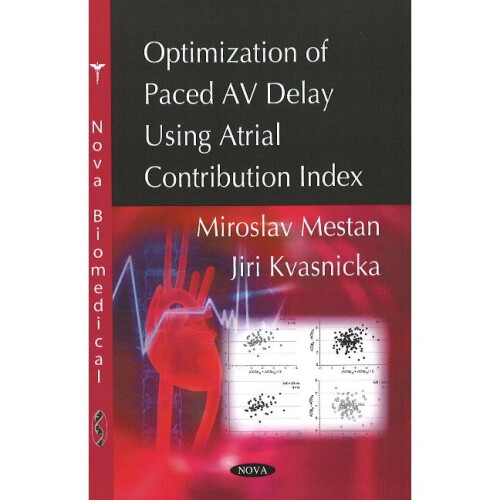
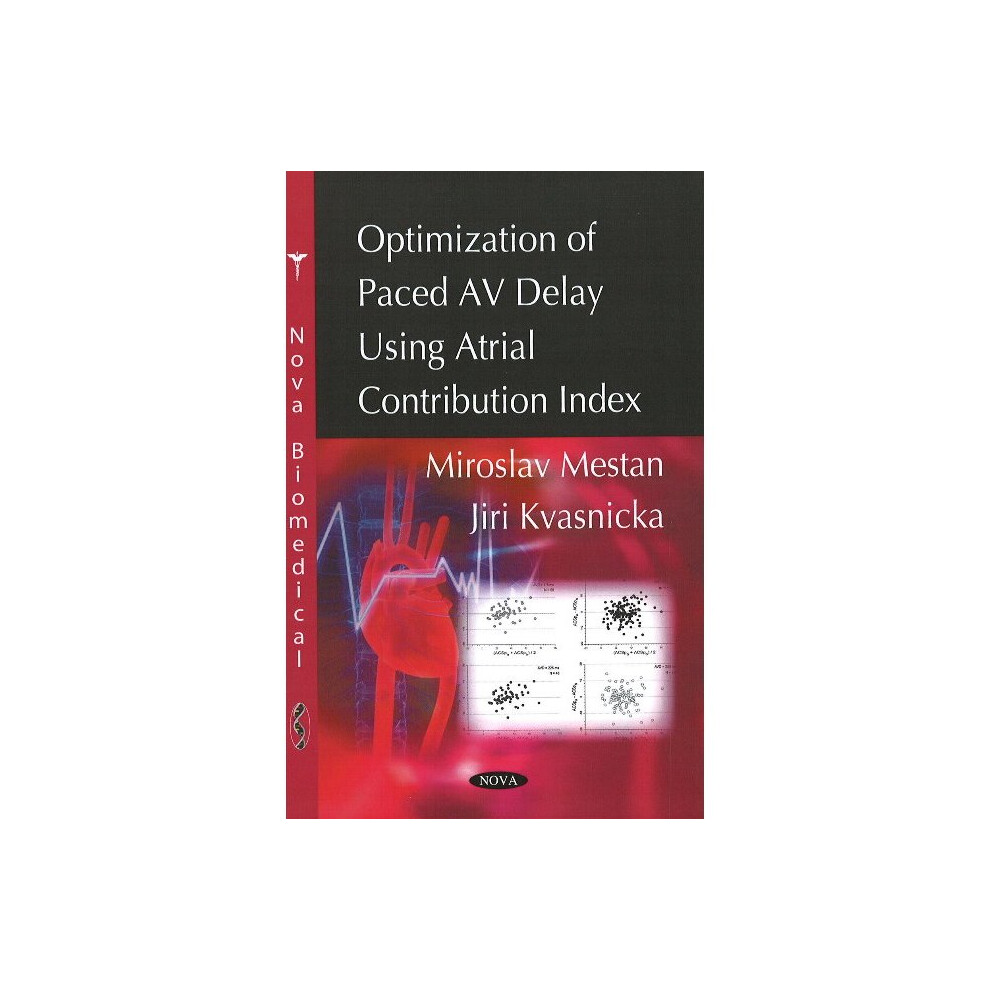
Optimization of Paced AV Delay Using Atrial Contribution Index
Hurry only 1 left
Smart shoppers OnBuy it!
- Earn Cashback on every purchase – spend it instantly on your next order
- Free delivery – on millions of items across the site
- Customers love us – 137,000 Trustpilot reviews and an 'Excellent' rating
Interest-free payment options available


See full product description & details
Delivery: Standard (Free) | Tue 10th - Mon 16th Nov
Returns: 30 days
180-day payment protection
Optimization of Paced AV Delay Using Atrial Contribution Index Description
The hemodynamic effect of the atria on the net performance of the heart is called atrial contribution (AC). AC is either linked to ventricular filling or to the systolic function of the heart, i.e. to the systolic volume or cardiac output. Several noninvasive methods for the quantification of AC are described in literature but none of them are routinely used in cardiac pacing centres due to the time-consuming nature of the methods, the limited reproducibility of measured values and observer dependency. The aim of these studies was to develop a method for determining optimal AV delay in patients treated by dual chamber pacing using an index (ACSp) that quantifies atrial contribution to the systolic volume of the left ventricle. The new method is based on the quantitative analysis of a beat to beat decrease in the amplitude of the pulse oximetry signal (SpO2). The change in the amplitudes is induced by a sudden drop of the stimulus to the right atrium, while maintaining the rate of ventricular stimuli at a constant level. The obtained ACSp is given as a percentage of the pulse amplitude of SpO2. The method is independent of the observer, non-invasive and relatively fast. In a group of 47 patients, remarkable similarities between ACSp and another atrial contribution index estimated using the tracings of invasively registered aortal pressure were demonstrated. In all investigated AV intervals of 50 to 250 ms, significant inter-individual variability of ACSp was discovered. The poorest hemodynamic effect was seen at AV delay of 50 ms (median ACSp of 10.4 % from 97 subjects). In 150 subjects, the following values of ACSp were obtained at AV delay of 200 ms: median 30 %, minimum 3.6 % and maximum 80.4 %. An increase in ACSp follows reduction of preload induced by administration of furosemide. This suggests that when preload decreases cardiac output is preserved by an increase in AC enforced by sympathetic activation.
Details
| OPC | P8HP52T |
|---|---|
| Codes | 1604566043 (ISBN-10) |
| 9781604566048 (ISBN) |
Compare Sellers for Optimization of Paced AV Delay Using Atrial Contribution Index
- New from £56.81
| Seller | Ratings | Warranty | Returns | Price | Delivery | Total | Quantity |
|---|---|---|---|---|---|---|---|
| (3.4k reviews) | - |
30 Days
Free Returns No
|
£56.81
|
+Free Delivery
Est. Delivery:
10th-16th Nov
|
£56.81
|
Earn as you shop with instant Cashback on everything.
No catch, no cost
- Paid into your OnBuy account
- Spend it on your next purchase
- Save it or withdraw it
Become a Cashback VIP
Just 1 purchase unlocks bigger deals & rates