




















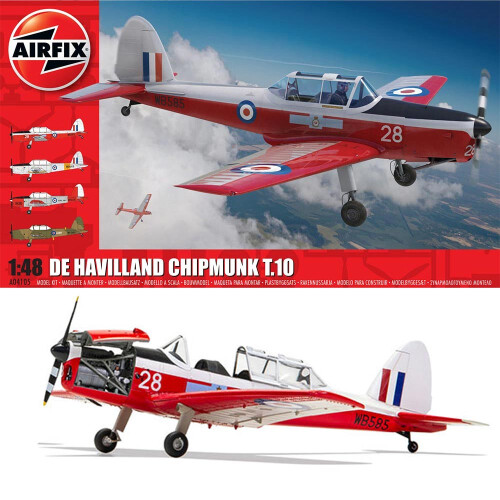
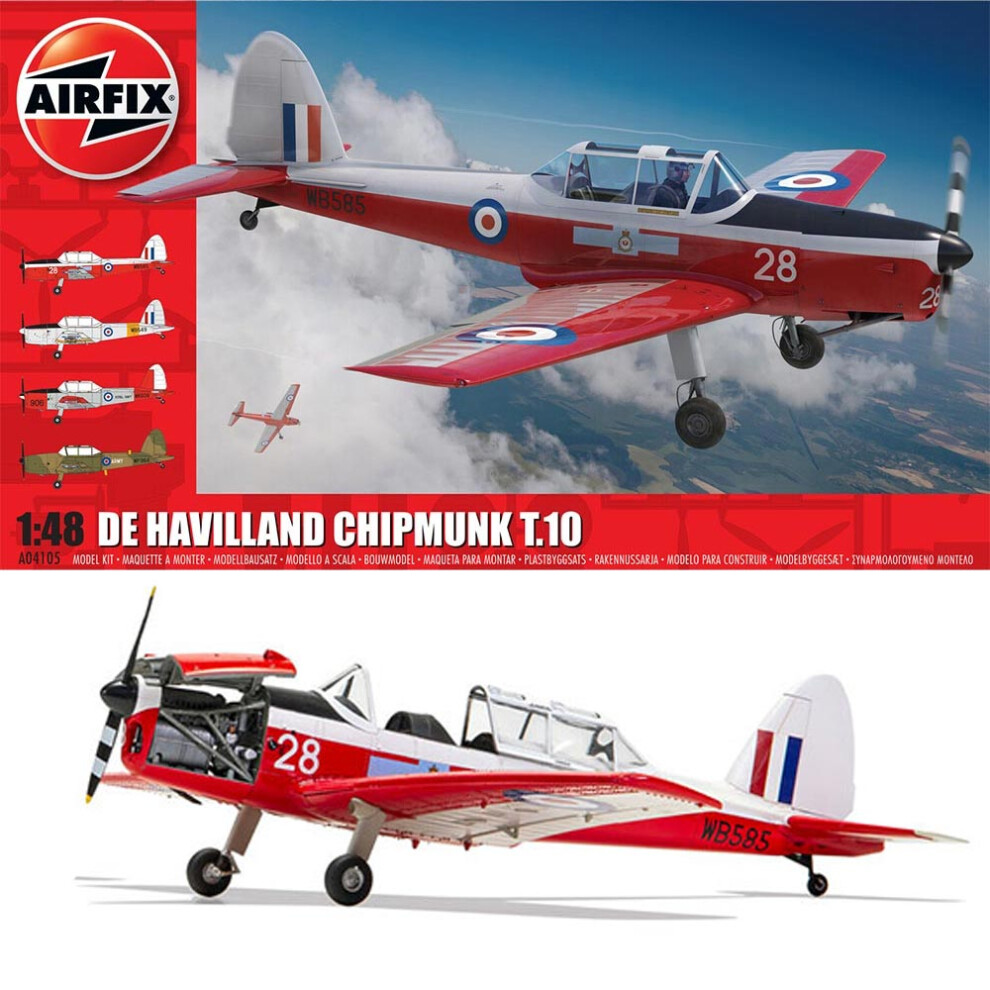

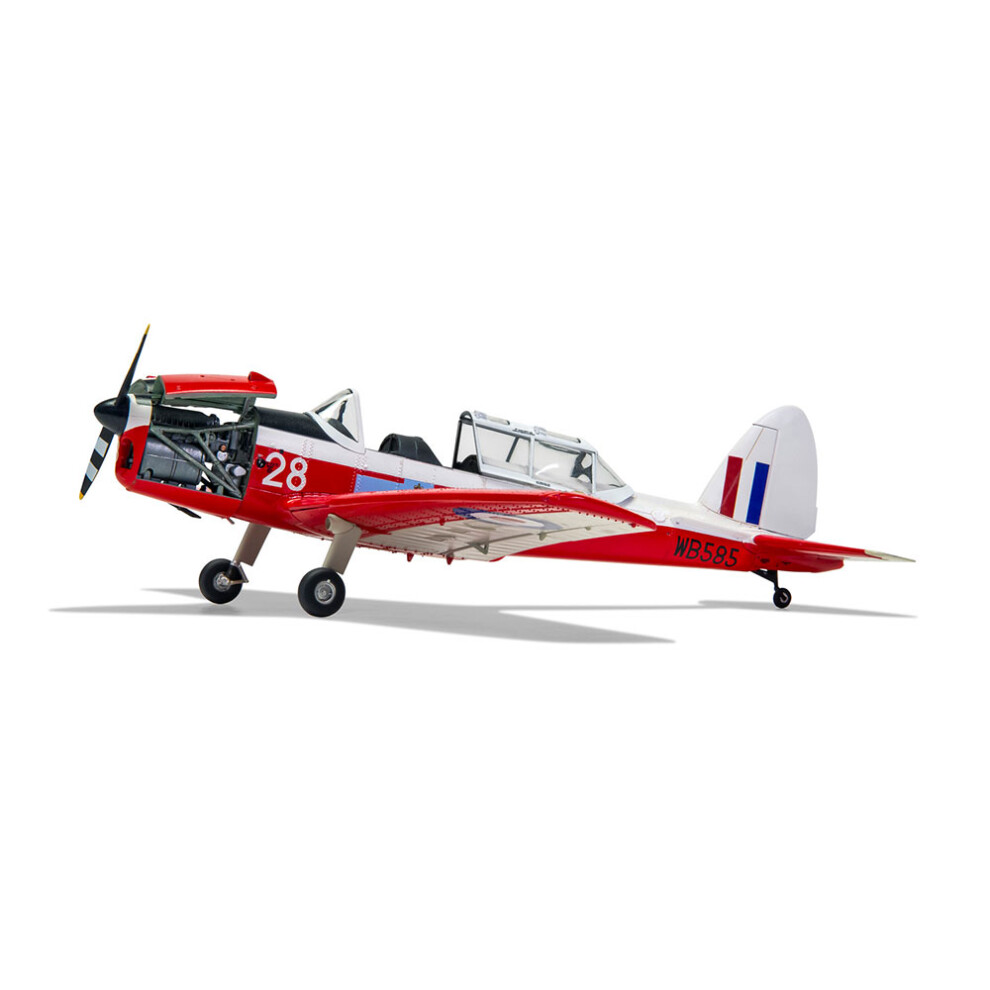

Airfix de Havilland Chipmunk T.10 Model Kit 1/48 A04105
In stock
Smart shoppers OnBuy it!
- Earn Cashback on every purchase – spend it instantly on your next order
- Free delivery – on millions of items across the site
- Customers love us – 136,000 Trustpilot reviews and an 'Excellent' rating
Interest-free payment options available


See full product description & details
Delivery: Standard (Free) | Tue 27th Oct - Mon 2nd Nov
There are 3 other sellers
Returns: 30 days
180-day payment protection
You might also like



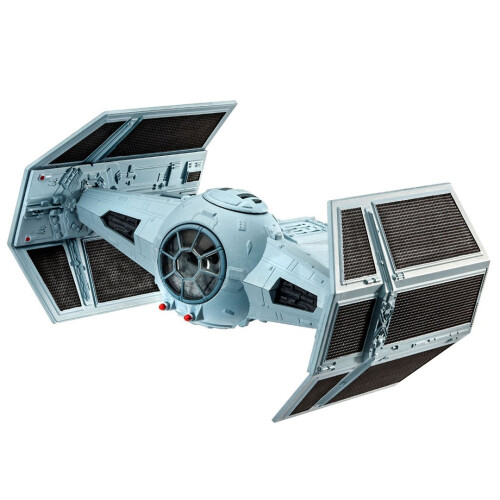
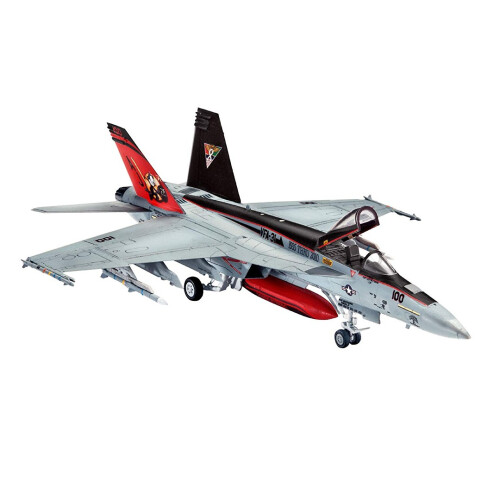
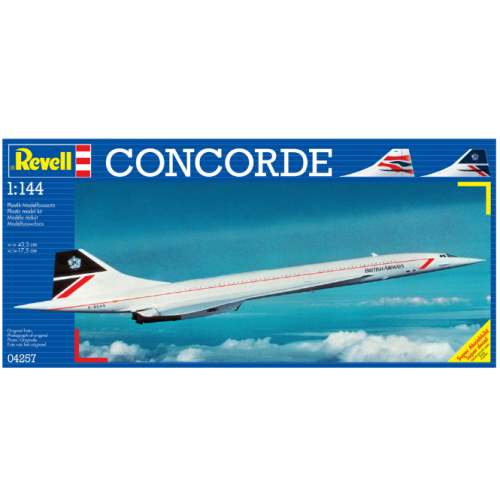
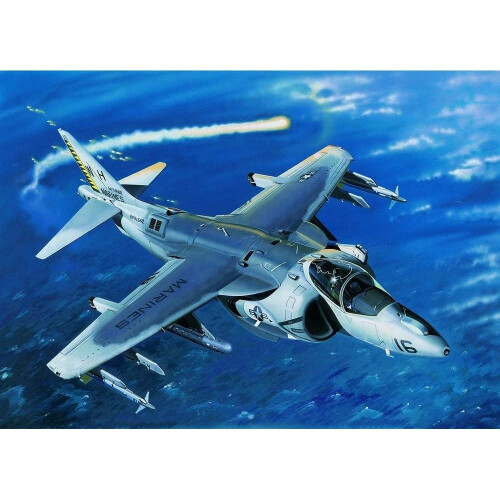




Airfix de Havilland Chipmunk T.10 Model Kit 1/48 A04105 Description
With the de Havilland designed Tiger Moth biplane proving to be such an important pilot training aircraft during the Second World War, it is no wonder that the same company would have a say in producing its replacement, when both the RCAF and Royal Air Force were looking to upgrade their primary pilot training capabilities. In order to keep pace with wartime aircraft production and to allow increasing numbers of Canadian airmen to be trained, de Havilland established an overseas subsidiary in Canada, the de Havilland Aircraft Company of Canada.Following the end of WWII, the company began design work on a new aircraft, one intended as a replacement for the ageing Tiger Moths still in RCAF service. A tandem two seat monoplane, the new trainer incorporated many advances over its predecessor, but shared many of its design philosophies, in that it was intended to be both simple to maintain and relatively forgiving to fly - these aircraft needed to be in the air, earning their keep. Having the distinction of being the first aircraft type designed and built by de Havilland Canada, the first Chipmunk took to the skies in May 1946 and almost immediately gained interest from the military. By April 1948, the Royal Canadian Air Force had taken delivery of their first Chipmunk, but they were not the only ones admiring the qualities of this extremely capable aeroplane. The vast majority of the 1,283 de Havilland Chipmunks built would be manufactured under licence in the UK, in factories at Hatfield and Chester, with around 735 of these going on to see service with the Royal Air Force, again as the direct replacement for the venerable old Tiger Moth.In RAF service, the British built machines were known as the de Havilland Chipmunk Mk.10 and they would go on to provide basic flight training support many thousands of future military aviators, in addition to providing air experience opportunities for many more as part of the University Air Squadron organisation. Despite being a Canadian design, the Chipmunk has become one of the most recognisable Royal Air Force aircraft of the post war era and has enjoyed a military career which began in the early 1950s and continues to this day. The Battle of Britain Memorial Flight still operate two Chipmunks regularly, providing currency training for aircrew assigned to fly the units historic taildraggers and also to allow crews to reconnoitre new display venues in advance of their show appearance. In other situations, the aircraft can be used to deliver replacement aircrew or spare parts, whilst the Flights Spitfires and Hurricanes are out on display duties during the Airshow season. These two Chipmunks have ensured that the aircraft must now be regarded as one of the longest serving types in Royal Air Force History. With such an impressive military pedigree as this, it is also interesting to note that the Chipmunk has gone on to become one of the most popular aircraft types on the civilian aviation scheme and it is estimated that well over 300 aircraft are still in airworthy condition worldwide.Sometimes unfairly described as The poor mans Spitfire, the Chipmunk surely now has to be regarded as a historic aircraft in its own right and one which continues to underline the effectiveness of its design. With aircraft formerly serving with the RAF, Army Air Corps, Royal Navy and the mount of several RAF display teams, there is no shortage of attractive schemes available for you to present your Chipmunk in if you are lucky enough to own one, not to mention the fact that the aircraft would also be operated by several overseas air forces all over the world. As a training aeroplane, it is obvious that more people would have experience with the de Havilland Chipmunk as opposed to the more glamorous front line aircraft types which are so popular with enthusiasts, however, the opportunity to still fly in one of these historic aeroplanes ensures that it continues to be held in great affection by owners and enthusiasts alike. Importantly, the Chipmunk is still fulfilling the role for which it was originally designed when making its first flight 74 years ago, providing basic flying training and allowing people to experience the thrill of flying for the first time. Dimensions 16.15 x 4.5 x 21.79 Scale
Details
| OPC | P6SYCN8 |
|---|---|
| Brand | |
| Codes | 5055286686320 (EAN) |
| MPN | A04105 |
| Links | Airfix Model Kits |
| Airfix Model Aircraft |

Product Images

Disclaimer: The information below is provided by various external sources and should be used as a guide only.
With the de Havilland designed Tiger Moth biplane proving to be such an important pilot training aircraft during the Second World War, it is no wonder that the same company would have a say in producing its replacement, when both the RCAF and Royal Air Force were looking to upgrade their primary pilot training capabilities. In order to keep pace with wartime aircraft production and to allow increasing numbers of Canadian airmen to be trained, de Havilland established an overseas subsidiary in Canada, the de Havilland Aircraft Company of Canada. Following the end of WWII, the company began design work on a new aircraft, one intended as a replacement for the ageing Tiger Moths still in RCAF service. A tandem two seat monoplane, the new trainer incorporated many advances over its predecessor, but shared many of its design philosophies, in that it was intended to be both simple to maintain and relatively forgiving to fly - these aircraft needed to be in the air, earning their keep. Having the distinction of being the first aircraft type designed and built by de Havilland Canada, the first Chipmunk took to the skies in May 1946 and almost immediately gained interest from the military. By April 1948, the Royal Canadian Air Force had taken delivery of their first Chipmunk, but they were not the only ones admiring the qualities of this extremely capable aeroplane. The vast majority of the 1,283 de Havilland Chipmunks built would be manufactured under licence in the UK, in factories at Hatfield and Chester, with around 735 of these going on to see service with the Royal Air Force, again as the direct replacement for the venerable old Tiger Moth. In RAF service, the British built machines were known as the de Havilland Chipmunk Mk.10 and they would go on to provide basic flight training support many thousands of future military aviators, in addition to providing air experience opportunities for many more as part of the University Air Squadron organisation. Despite being a Canadian design, the Chipmunk has become one of the most recognisable Royal Air Force aircraft of the post war era and has enjoyed a military career which began in the early 1950s and continues to this day. The Battle of Britain Memorial Flight still operate two Chipmunks regularly, providing currency training for aircrew assigned to fly the unit's historic '˜taildraggers' and also to allow crews to reconnoitre new display venues in advance of their show appearance. In other situations, the aircraft can be used to deliver replacement aircrew or spare parts, whilst the Flight'™s Spitfires and Hurricanes are out on display duties during the Airshow season. These two Chipmunks have ensured that the aircraft must now be regarded as one of the longest serving types in Royal Air Force History. With such an impressive military pedigree as this, it is also interesting to note that the Chipmunk has gone on to become one of the most popular aircraft types on the civilian aviation scheme and it is estimated that well over 300 aircraft are still in airworthy condition worldwide. Sometimes unfairly described as '˜The poor man's Spitfire', the Chipmunk surely now has to be regarded as a historic aircraft in its own right and one which continues to underline the effectiveness of its design. With aircraft formerly serving with the RAF, Army Air Corps, Royal Navy and the mount of several RAF display teams, there is no shortage of attractive schemes available for you to present your Chipmunk in if you are lucky enough to own one, not to mention the fact that the aircraft would also be operated by several overseas air forces all over the world. As a training aeroplane, it is obvious that more people would have experience with the de Havilland Chipmunk as opposed to the more glamourous front line aircraft types which are so popular with enthusiasts, however, the opportunity to still fly in one of these historic aeroplanes ensures that it continues to be held in great affection by owners and enthusiasts alike. Importantly, the Chipmunk is still fulfilling the role for which it was originally designed when making its first flight 74 years ago, providing basic flying training and allowing people to experience the thrill of flying for the first time.
With the de Havilland designed Tiger Moth biplane proving to be such an important pilot training aircraft during the Second World War, it is no wonder that the same company would have a say in producing its replacement, when both the RCAF and Royal Air Force were looking to upgrade their primary pilot training capabilities. In order to keep pace with wartime aircraft production and to allow increasing numbers of Canadian airmen to be trained, de Havilland established an overseas subsidiary in Canada, the de Havilland Aircraft Company of Canada. Following the end of WWII, the company began design work on a new aircraft, one intended as a replacement for the ageing Tiger Moths still in RCAF service. A tandem two seat monoplane, the new trainer incorporated many advances over its predecessor, but shared many of its design philosophies, in that it was intended to be both simple to maintain and relatively forgiving to fly - these aircraft needed to be in the air, earning their keep. Having the distinction of being the first aircraft type designed and built by de Havilland Canada, the first Chipmunk took to the skies in May 1946 and almost immediately gained interest from the military. By April 1948, the Royal Canadian Air Force had taken delivery of their first Chipmunk, but they were not the only ones admiring the qualities of this extremely capable aeroplane. The vast majority of the 1,283 de Havilland Chipmunks built would be manufactured under licence in the UK, in factories at Hatfield and Chester, with around 735 of these going on to see service with the Royal Air Force, again as the direct replacement for the venerable old Tiger Moth. In RAF service, the British built machines were known as the de Havilland Chipmunk Mk.10 and they would go on to provide basic flight training support many thousands of future military aviators, in addition to providing air experience opportunities for many more as part of the University Air Squadron organisation. Despite being a Canadian design, the Chipmunk has become one of the most recognisable Royal Air Force aircraft of the post war era and has enjoyed a military career which began in the early 1950s and continues to this day. The Battle of Britain Memorial Flight still operate two Chipmunks regularly, providing currency training for aircrew assigned to fly the unit's historic '˜taildraggers' and also to allow crews to reconnoitre new display venues in advance of their show appearance. In other situations, the aircraft can be used to deliver replacement aircrew or spare parts, whilst the Flight'™s Spitfires and Hurricanes are out on display duties during the Airshow season. These two Chipmunks have ensured that the aircraft must now be regarded as one of the longest serving types in Royal Air Force History. With such an impressive military pedigree as this, it is also interesting to note that the Chipmunk has gone on to become one of the most popular aircraft types on the civilian aviation scheme and it is estimated that well over 300 aircraft are still in airworthy condition worldwide. Sometimes unfairly described as '˜The poor man's Spitfire', the Chipmunk surely now has to be regarded as a historic aircraft in its own right and one which continues to underline the effectiveness of its design. With aircraft formerly serving with the RAF, Army Air Corps, Royal Navy and the mount of several RAF display teams, there is no shortage of attractive schemes available for you to present your Chipmunk in if you are lucky enough to own one, not to mention the fact that the aircraft would also be operated by several overseas air forces all over the world. As a training aeroplane, it is obvious that more people would have experience with the de Havilland Chipmunk as opposed to the more glamourous front line aircraft types which are so popular with enthusiasts, however, the opportunity to still fly in one of these historic aeroplanes ensures that it continues to be held in great affection by owners and enthusiasts alike. Importantly, the Chipmunk is still fulfilling the role for which it was originally designed when making its first flight 74 years ago, providing basic flying training and allowing people to experience the thrill of flying for the first time.
Alternative names:
- Airfix de Havilland Chipmunk T.10 Fixed-wing aircraft model Assembly kit 1:48
- Airfix de Havilland Chipmunk T.10 Fixed-wing aircraft model Assembly kit 1:48
Detailed Product Information
Features
| Type | Aircraft model |
|---|---|
| Material | Plastic |
| Purpose | Military aircraft |
| Recommended skill level | 3 |
| Construction type | Assembly kit |
| Product type | Fixed-wing aircraft model |
| Original model name | de Havilland Chipmunk T.10 |
| Theme | Second World War |
| Scale | 1:48 |
| Suggested gender | Any gender |
| Assembly time | 120 min |
Packaging data
| Stickers included | Yes |
|---|
Weight & dimensions
| Wingspan | 21.7 cm |
|---|
Compare Sellers for Airfix de Havilland Chipmunk T.10 Model Kit 1/48 A04105
- New from £26.77
| Seller | Ratings | Warranty | Returns | Price | Delivery | Total | Quantity |
|---|---|---|---|---|---|---|---|
| (3.4k reviews) | - |
30 Days
Free Returns No
|
£26.77
|
+Free Delivery
Est. Delivery:
27th Oct - 2nd Nov
|
£26.77
Recommended
We recommend listings based on a combination of price, delivery time, quality of seller reviews and other factors
|
||
| (10 reviews) | - |
30 Days
Free Returns No
|
£24.95
|
+£4.25 Delivery
Est. Delivery:
16th-17th Oct
|
£29.20
|
||
| (5.6k reviews) | 1 month |
30 Days
Free Returns No
|
£33.96
|
+Fast & Free Delivery
Est. Delivery:
16th-17th Oct
|
£33.96
|
||
| (1.6k reviews) | - |
30 Days
Free Returns No
|
£31.55
|
+£3.00 Delivery
Est. Delivery:
31st Oct - 19th Nov
|
£34.55
|
Earn as you shop with instant Cashback on everything.
No catch, no cost
- Paid into your OnBuy account
- Spend it on your next purchase
- Save it or withdraw it
Become a Cashback VIP
Just 1 purchase unlocks bigger deals & rates