





















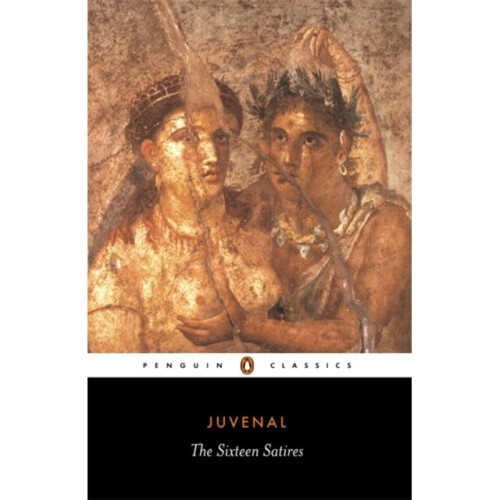
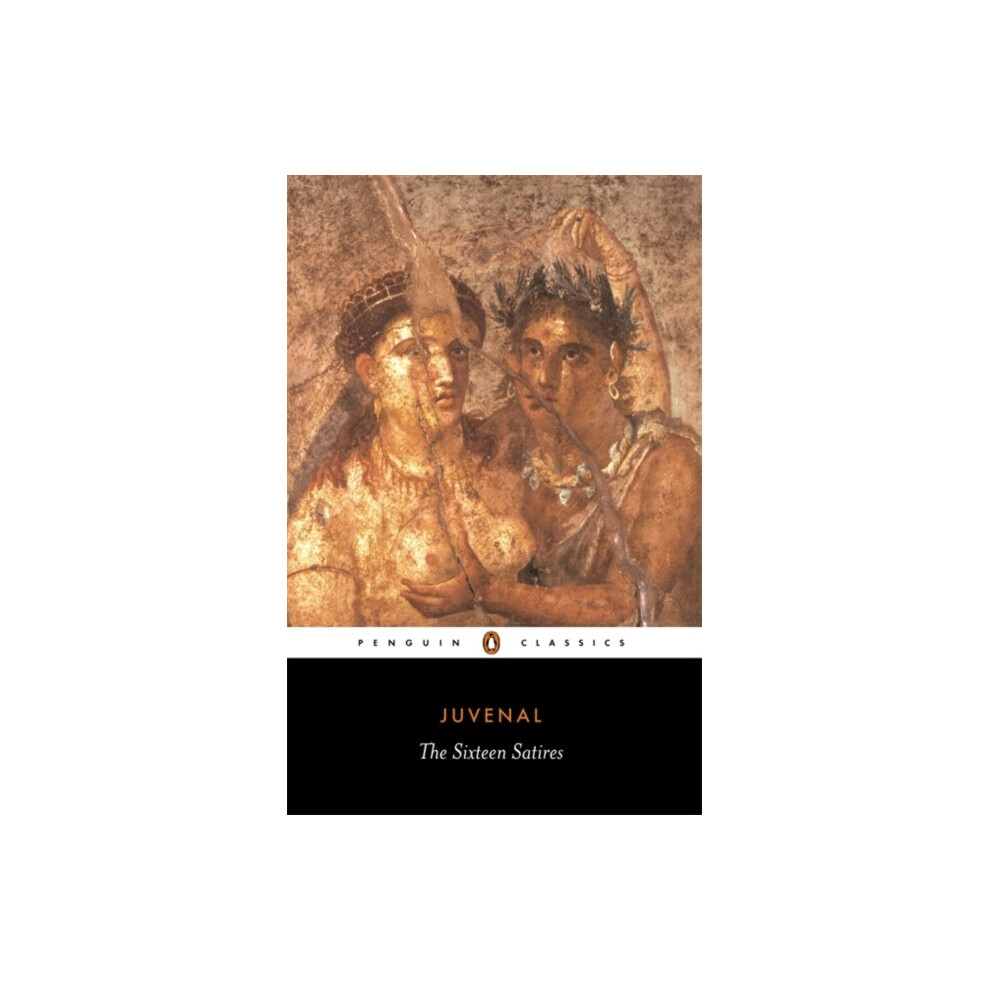
The Sixteen Satires (Penguin Classics) (Paperback)
In stock
Smart shoppers OnBuy it!
- Earn Cashback on every purchase – spend it instantly on your next order
- Free delivery – on millions of items across the site
- Customers love us – 135,000 Trustpilot reviews and an 'Excellent' rating
Interest-free payment options available


See full product description & details
Delivery: Standard (Free) | Tue 13th - Mon 19th Oct
There are 4 other sellers
Returns: 30 days
180-day payment protection
You might also like



The Sixteen Satires (Penguin Classics) (Paperback) Description
Offers satirical and bitter denunciation of the degeneracy of Roman society. This work draws forth a world of whores fortune-tellers boozy politicians slick lawyers shameless sycophants ageing flirts and downtrodden teachers. It portraits of decadent aristocrats - male and female - and the jumped-up sons of newly-rich former slaves.Details
| OPC | P7QNVM |
|---|---|
| Codes | 0140447040 (ISBN-10) |
| 9780140447040 (ISBN) |
Disclaimer: The information below is provided by various external sources and should be used as a guide only.
Sixteen Satires
Juvenal’s Satires create a fascinating (and immediately familiar) world of whores, fortune-tellers, boozy politicians, slick lawyers, shameless sycophants, ageing flirts and downtrodden teachers
Perhaps more than any other writer, Juvenal (c. 55-138 AD) captures the splendour, the squalor and the sheer vibrant energy of everyday Roman life. A member of the traditional land-owning class which was rapidly seeing power slip into the hands of dynamic outsiders, he offers equally savage portraits of decadent aristocrats; women interested only in ‘rough trade’ like actors and gladiators; and the jumped-up sons of panders and auctioneers. He constantly compares the corruption of his own generation with their stern upright forebears. And he makes us feel from within the deep humiliation of having to dance attendance on rich but odious patrons.
Green’s celebrated translation is fully annotated and clarifies all references and allusions in the text, making it equally suitable for students and for continuous reading. For this new edition it has been substantially revised throughout to give it an even more contemporary flavour.
For more than seventy years, Penguin has been the leading publisher of classic literature in the English-speaking world. With more than 1,700 titles, Penguin Classics represents a global bookshelf of the best works throughout history and across genres and disciplines. Readers trust the series to provide authoritative texts enhanced by introductions and notes by distinguished scholars and contemporary authors, as well as up-to-date translations by award-winning translators.
About author(s)
Less is known about the life of Juvenal (D. Iunius Iuuenalis) than was once believed – a key source, an inscription naming one Iunius Iuuenalis, refers to a later descendant, not the satirist – and such evidence as there is remains sadly inadequate. Much of it comes from Juvenal’s own work. We know that the family was from Aquinum in Latium near modern Monte Cassino. One ancient Life offers a plausible birth date of AD 55. Another states that till middle-age Juvenal practised rhetoric, not for professional reasons but as an amusement, which implies a private income. Book I of the Satires was not published till c. 110-12, when the poet was in his fifties, and is clearly the work of an impoverished and embittered man who has come down in the world – a hanger-on of wealthy patrons with a chip on his shoulder – but the precise circumstances of Juvenal’s fall from grace are unclear.The Lives all agree that he was exiled for an indiscreet lampoon of the jobbing of appointments by a Court favourite. But they do not agree as to where he was sent or which emperor was responsible, and Juvenal never refers to the matter. Many doubt whether he was exiled at all. If he was, it was almost certainly by Domitian, c. 93, to Egypt. In any case he must have lost his patrimony. It is reasonable to assume that he was recalled after Domitian’s assassination in 96. After Hadrian’s accession he seems to have acquired a small farm at Tivoli and a house in Rome. His last and unfinished (or partially lost) collection appeared c. 128-30. He may have died then: at the latest he is unlikely to have survived long after Hadrian’s death in 138.
Sixteen Satires
Juvenal’s Satires create a fascinating (and immediately familiar) world of whores, fortune-tellers, boozy politicians, slick lawyers, shameless sycophants, ageing flirts and downtrodden teachers
Perhaps more than any other writer, Juvenal (c. 55-138 AD) captures the splendour, the squalor and the sheer vibrant energy of everyday Roman life. A member of the traditional land-owning class which was rapidly seeing power slip into the hands of dynamic outsiders, he offers equally savage portraits of decadent aristocrats; women interested only in ‘rough trade’ like actors and gladiators; and the jumped-up sons of panders and auctioneers. He constantly compares the corruption of his own generation with their stern upright forebears. And he makes us feel from within the deep humiliation of having to dance attendance on rich but odious patrons.
Green’s celebrated translation is fully annotated and clarifies all references and allusions in the text, making it equally suitable for students and for continuous reading. For this new edition it has been substantially revised throughout to give it an even more contemporary flavour.
For more than seventy years, Penguin has been the leading publisher of classic literature in the English-speaking world. With more than 1,700 titles, Penguin Classics represents a global bookshelf of the best works throughout history and across genres and disciplines. Readers trust the series to provide authoritative texts enhanced by introductions and notes by distinguished scholars and contemporary authors, as well as up-to-date translations by award-winning translators.
About author(s)
Less is known about the life of Juvenal (D. Iunius Iuuenalis) than was once believed – a key source, an inscription naming one Iunius Iuuenalis, refers to a later descendant, not the satirist – and such evidence as there is remains sadly inadequate. Much of it comes from Juvenal’s own work. We know that the family was from Aquinum in Latium near modern Monte Cassino. One ancient Life offers a plausible birth date of AD 55. Another states that till middle-age Juvenal practised rhetoric, not for professional reasons but as an amusement, which implies a private income. Book I of the Satires was not published till c. 110-12, when the poet was in his fifties, and is clearly the work of an impoverished and embittered man who has come down in the world – a hanger-on of wealthy patrons with a chip on his shoulder – but the precise circumstances of Juvenal’s fall from grace are unclear.The Lives all agree that he was exiled for an indiscreet lampoon of the jobbing of appointments by a Court favourite. But they do not agree as to where he was sent or which emperor was responsible, and Juvenal never refers to the matter. Many doubt whether he was exiled at all. If he was, it was almost certainly by Domitian, c. 93, to Egypt. In any case he must have lost his patrimony. It is reasonable to assume that he was recalled after Domitian’s assassination in 96. After Hadrian’s accession he seems to have acquired a small farm at Tivoli and a house in Rome. His last and unfinished (or partially lost) collection appeared c. 128-30. He may have died then: at the latest he is unlikely to have survived long after Hadrian’s death in 138.
Alternative names:
- ISBN Sixteen Satires
- ISBN Sixteen Satires
Detailed Product Information
Features
| Language version | English |
|---|---|
| Genre | Classics |
| Release date (DD/MM/YYYY) | 01/02/1999 |
| Number of pages | 320 pages |
| Written by | Juvenal |
| Publisher | Penguin Classics |
| International Standard Book Number (ISBN) | 9780140447040 |
| Book cover type | Paperback |
Compare Sellers for The Sixteen Satires (Penguin Classics) (Paperback)
- New from £10.52
| Seller | Ratings | Warranty | Returns | Price | Delivery | Total | Quantity |
|---|---|---|---|---|---|---|---|
| (3.3k reviews) | - |
30 Days
Free Returns No
|
£10.52
|
+Free Delivery
Est. Delivery:
13th-19th Oct
|
£10.52
Recommended
We recommend listings based on a combination of price, delivery time, quality of seller reviews and other factors
|
||
| (2.5k reviews) | - |
30 Days
Free Returns No
|
£12.11
|
+Fast & Free Delivery
Est. Delivery:
1st-2nd Oct
|
£12.11
|
||
| (2.7k reviews) | - |
30 Days
Free Returns No
|
£13.62
|
+Free Delivery
Est. Delivery:
6th-8th Oct
|
£13.62
|
||
| (1.6k reviews) | - |
30 Days
Free Returns No
|
£10.96
|
+£3.00 Delivery
Est. Delivery:
17th Oct - 5th Nov
|
£13.96
|
||
| (207 reviews) | - |
30 Days
Free Returns No
|
£16.65
|
+Free Delivery
Est. Delivery:
7th-9th Oct
|
£16.65
|

Earn as you shop with instant Cashback on everything.
No catch, no cost
- Paid into your OnBuy account
- Spend it on your next purchase
- Save it or withdraw it
Become a Cashback VIP
Just 1 purchase unlocks bigger deals & rates