



















The Symposium
In stock
Smart shoppers OnBuy it!
- Earn Cashback on every purchase – spend it instantly on your next order
- Free delivery – on millions of items across the site
- Customers love us – 136,000 Trustpilot reviews and an 'Excellent' rating
Interest-free payment options available


See full product description & details
Delivery: Standard (Free) | Fri 23rd - Thu 29th Oct
There are 3 other sellers
Returns: 30 days
180-day payment protection
You might also like



The Symposium Description
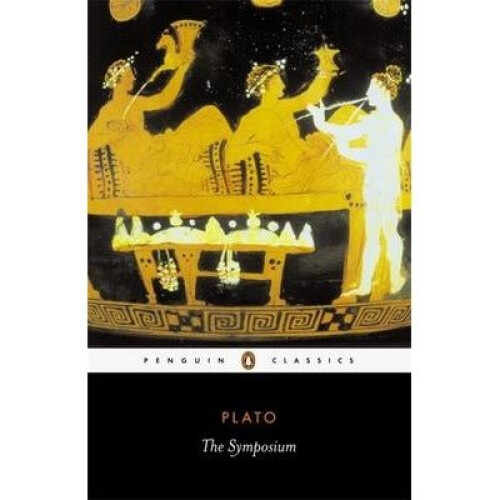
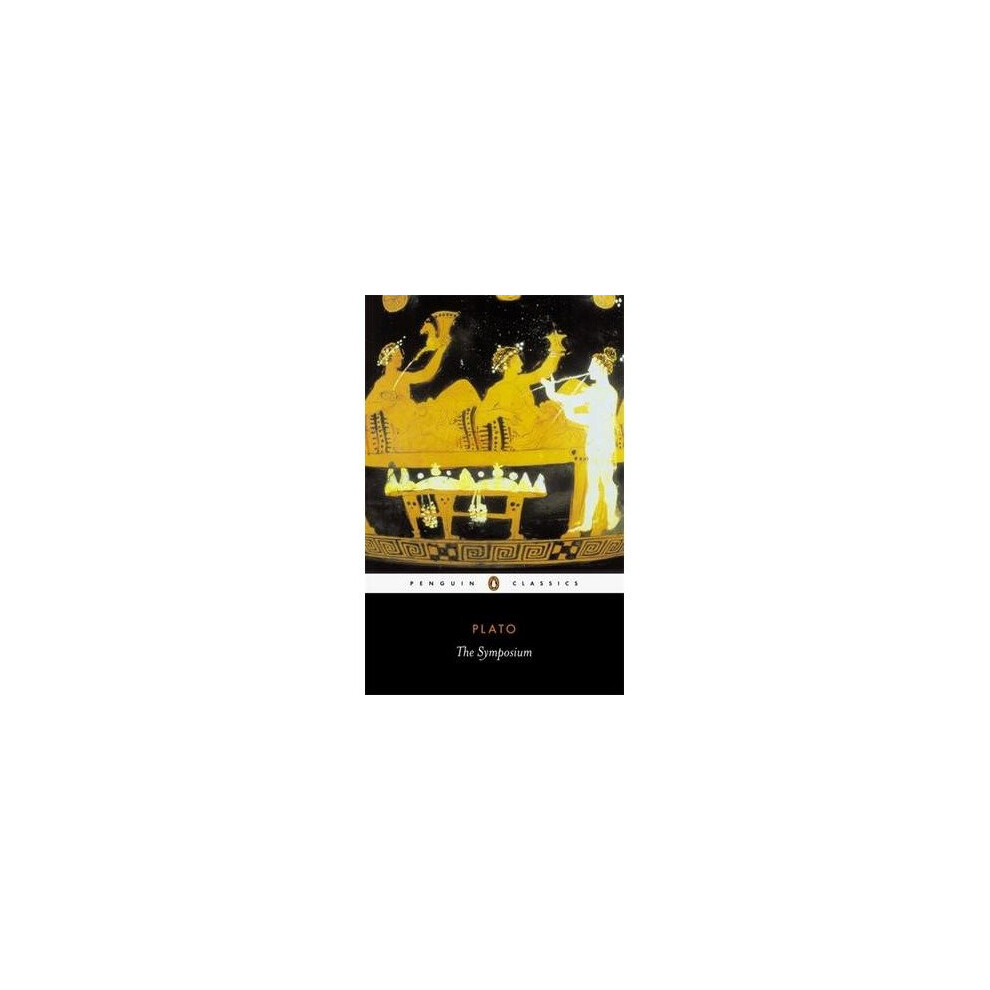
Unfolding in an informal setting, Plato's The Symposium is a powerful discussion on the nature of love, translated from the Greek with notes and an introduction by Christopher Gill in Penguin Classics. In the course of a lively drinking party, a group of Athenian intellectuals exchange views on eros, or desire. From their conversation emerge a series of subtle reflections on gender roles, sex in society and the sublimation of basic human instincts. The discussion culminates in a radical challenge to conventional views by Plato's mentor, Socrates, who advocates transcendence through spiritual love. The Symposium is a deft interweaving of different viewpoints and ideas about the nature of love - as a response to beauty, a cosmic force, a motive for social action and as a means of ethical education. Christopher Gill's translation retains all the drama and humour of Plato's language, bringing the historical figures to life. His introduction discusses aspects of classical Athenian life shown in The Symposium and provides thoughtful examinations of the individual speeches. Plato (c.4 27-347 BC) stands with Socrates and Aristotle as one of the shapers of the whole intellectual tradition of the West. He founded the Academy in Athens, the first permanent institution devoted to philosophical research and teaching, and the prototype of all Western universities. If you enjoyed The Symposium, you might like Aristotle's Poetics, also available in Penguin Classics. 'Translated in bright modern English by Christopher Gill' Peter Stothard, The TimesDetails
| OPC | P6D75H |
|---|---|
| Codes | 0140449272 (ISBN-10) |
| 9780140449273 (ISBN) |
Detailed Product Information
| Release Date | 27/02/2003 |
|---|---|
| Book Type | Paperback |
| Publisher | Penguin Books Ltd |
| Author | Plato |
| Release Date | 27/02/2003 |
| Book Type | Paperback |
| Publisher | Penguin Books Ltd |
| Author | Plato |
| Release Date | 27/02/2003 |
| Book Type | Paperback |
| Publisher | Penguin Books Ltd |
| Author | Plato |
Disclaimer: The information below is provided by various external sources and should be used as a guide only.
The Symposium
A fascinating discussion on sex, gender, and human instincts, as relevant today as ever
In the course of a lively drinking party, a group of Athenian intellectuals exchange views on eros, or desire. From their conversation emerges a series of subtle reflections on gender roles, sex in society and the sublimation of basic human instincts. The discussion culminates in a radical challenge to conventional views by Plato’s mentor, Socrates, who advocates transcendence through spiritual love. The Symposium is a deft interweaving of different viewpoints and ideas about the nature of love—as a response to beauty, a cosmic force, a motive for social action and as a means of ethical education.
For more than seventy years, Penguin has been the leading publisher of classic literature in the English-speaking world. With more than 1,700 titles, Penguin Classics represents a global bookshelf of the best works throughout history and across genres and disciplines. Readers trust the series to provide authoritative texts enhanced by introductions and notes by distinguished scholars and contemporary authors, as well as up-to-date translations by award-winning translators.
About author(s)
Plato, with Socrates and Aristotle, is the founder of the Western intellectual tradition. Like his mentor Socrates, he was essentially a practical philosopher who found the abstract theory and visionary schemes of many contemporary thinkers misguided and sterile. He was born about 429 BCE in Athens, the son of a prominent family that had long been involved in the city’s politics. Extremely little survives of the history of Plato’s youth, but he was raised in the shadow of the great Peloponnesian War, and its influence must have caused him to reject the political career open to him and to become a follower of the brilliantly unorthodox Socrates, the self-proclaimed “gadfly” of Athens.
Socrates’ death in 399 BCE turned Plato forever from politics, and in the next decade he wrote his first dialogues, among them Apology and Euthyphro. At age 40, Plato visited Italy and Syracuse, and upon his return he founded the Academy-Europe’s first university—in a sacred park on the outskirts of Athens. The Academy survived for a millennium, finally closed by the emperor Justinian in 529. Plato hoped his school would train its pupils to carry out a life of service and to investigate questions of science and mathematics. Plato’s old age was probably devoted to teaching and writing, he died in Athens in 348 BCE.
The Symposium
A fascinating discussion on sex, gender, and human instincts, as relevant today as ever
In the course of a lively drinking party, a group of Athenian intellectuals exchange views on eros, or desire. From their conversation emerges a series of subtle reflections on gender roles, sex in society and the sublimation of basic human instincts. The discussion culminates in a radical challenge to conventional views by Plato’s mentor, Socrates, who advocates transcendence through spiritual love. The Symposium is a deft interweaving of different viewpoints and ideas about the nature of love—as a response to beauty, a cosmic force, a motive for social action and as a means of ethical education.
For more than seventy years, Penguin has been the leading publisher of classic literature in the English-speaking world. With more than 1,700 titles, Penguin Classics represents a global bookshelf of the best works throughout history and across genres and disciplines. Readers trust the series to provide authoritative texts enhanced by introductions and notes by distinguished scholars and contemporary authors, as well as up-to-date translations by award-winning translators.
About author(s)
Plato, with Socrates and Aristotle, is the founder of the Western intellectual tradition. Like his mentor Socrates, he was essentially a practical philosopher who found the abstract theory and visionary schemes of many contemporary thinkers misguided and sterile. He was born about 429 BCE in Athens, the son of a prominent family that had long been involved in the city’s politics. Extremely little survives of the history of Plato’s youth, but he was raised in the shadow of the great Peloponnesian War, and its influence must have caused him to reject the political career open to him and to become a follower of the brilliantly unorthodox Socrates, the self-proclaimed “gadfly” of Athens.
Socrates’ death in 399 BCE turned Plato forever from politics, and in the next decade he wrote his first dialogues, among them Apology and Euthyphro. At age 40, Plato visited Italy and Syracuse, and upon his return he founded the Academy-Europe’s first university—in a sacred park on the outskirts of Athens. The Academy survived for a millennium, finally closed by the emperor Justinian in 529. Plato hoped his school would train its pupils to carry out a life of service and to investigate questions of science and mathematics. Plato’s old age was probably devoted to teaching and writing, he died in Athens in 348 BCE.
Alternative names:
- ISBN The Symposium
- ISBN The Symposium
Detailed Product Information
Features
| Language version | English |
|---|---|
| Genre | Classics |
| Release date (DD/MM/YYYY) | 29/04/2003 |
| Number of pages | 144 pages |
| Written by | Plato |
| Publisher | Penguin Classics |
| International Standard Book Number (ISBN) | 9780140449273 |
| Translator | Christopher Gill |
| Book cover type | Paperback |
Customers also buy
Compare Sellers for The Symposium
- New from £8.81
| Seller | Ratings | Warranty | Returns | Price | Delivery | Total | Quantity |
|---|---|---|---|---|---|---|---|
| (3.4k reviews) | - |
30 Days
Free Returns No
|
£8.81
|
+Free Delivery
Est. Delivery:
23rd-29th Oct
|
£8.81
Recommended
We recommend listings based on a combination of price, delivery time, quality of seller reviews and other factors
|
||
| (2.6k reviews) | - |
30 Days
Free Returns No
|
£9.96
|
+Fast & Free Delivery
Est. Delivery:
10th-12th Oct
|
£9.96
|
||
| (209 reviews) | - |
30 Days
Free Returns No
|
£12.48
|
+Free Delivery
Est. Delivery:
16th-19th Oct
|
£12.48
|
||
| (1.6k reviews) | - |
30 Days
Free Returns No
|
£8.92
|
+£3.00 Delivery
Est. Delivery:
28th Oct - 16th Nov
|
£11.92
|

Earn as you shop with instant Cashback on everything.
No catch, no cost
- Paid into your OnBuy account
- Spend it on your next purchase
- Save it or withdraw it
Become a Cashback VIP
Just 1 purchase unlocks bigger deals & rates